
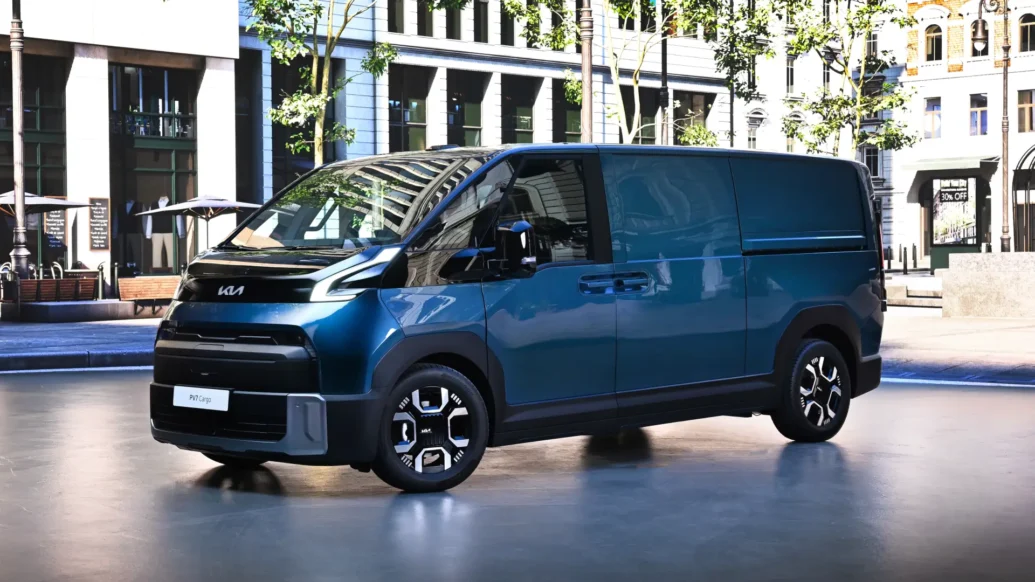
Kia has revealed the new PV7, a medium-sized electric van promising more than 286 miles of range, up to 1,200kg of payload and charging in around 25 minutes.
Scheduled to reach Europe during the second half of 2027, the PV7 is the second model in Kia’s dedicated ‘Platform Beyond Vehicle’ range. It builds on the smaller PV5 with increased load capacity, larger batteries and a much broader selection of bodies and conversions.
Its dimensions and 6.1m3 load volume put the PV7 firmly into Ford Transit Custom, Volkswagen Transporter and Renault Trafic territory. A High Roof model will increase capacity to 8.0m3, while Kia also plans Compact, Passenger and Chassis Cab versions.
Kia hasn’t confirmed UK prices or the precise model range we’ll receive just yet, but the combination of a competitive payload, long range and 800V charging architecture show that this is far more than simply a stretched PV5.
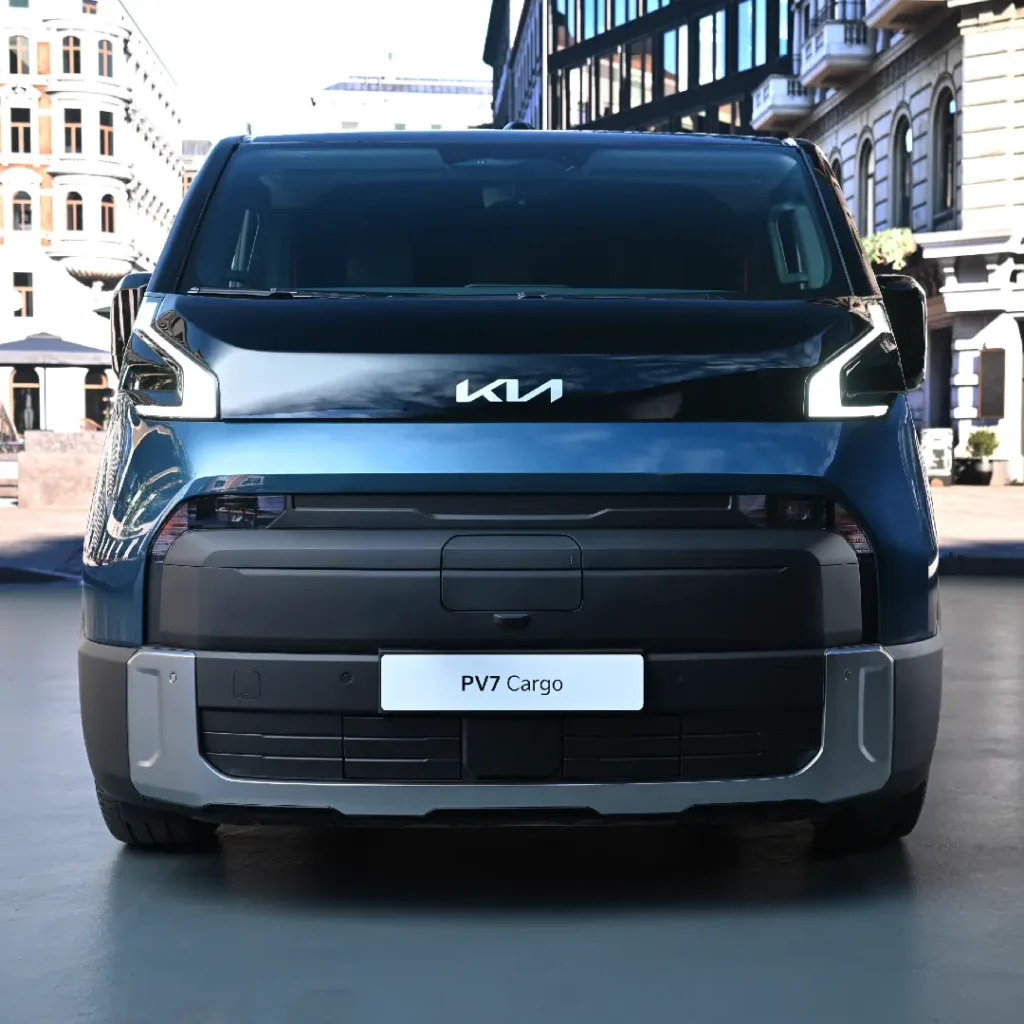
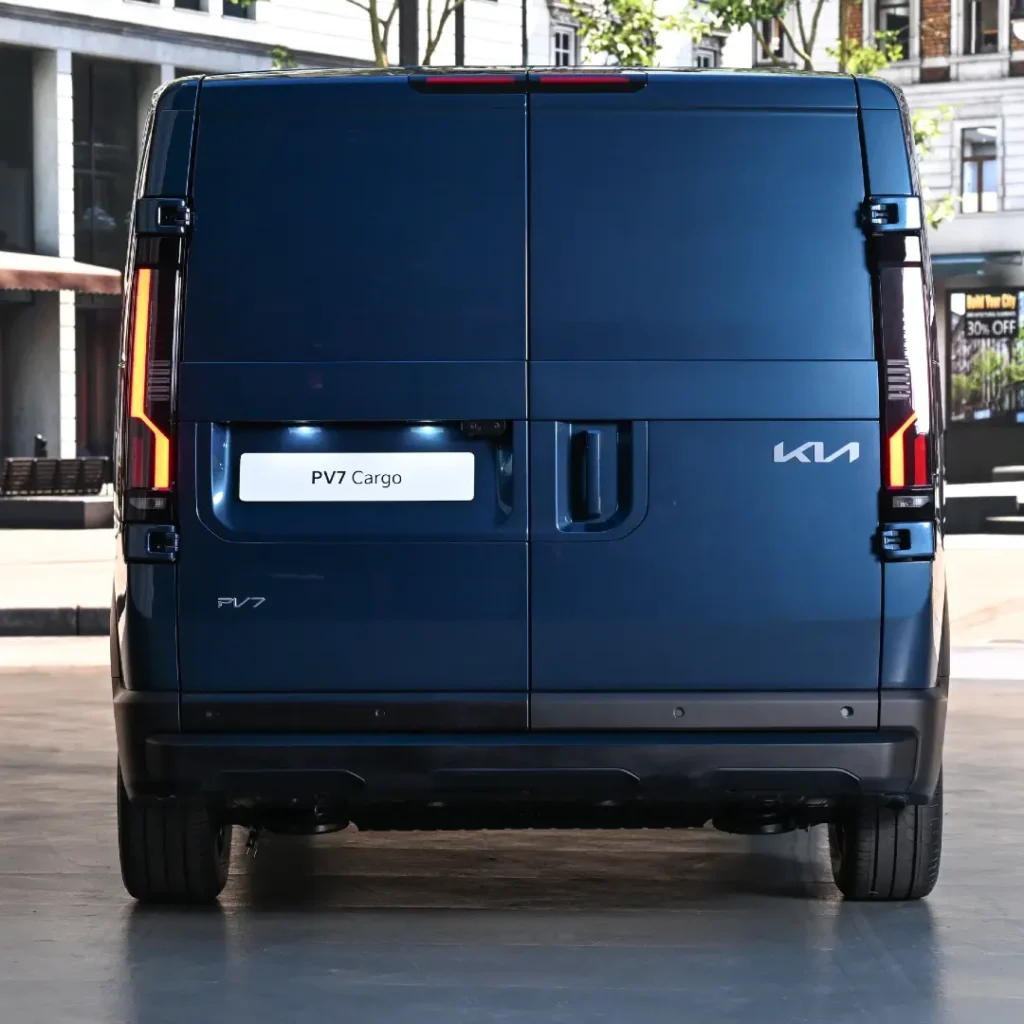
How big is the Kia PV7?
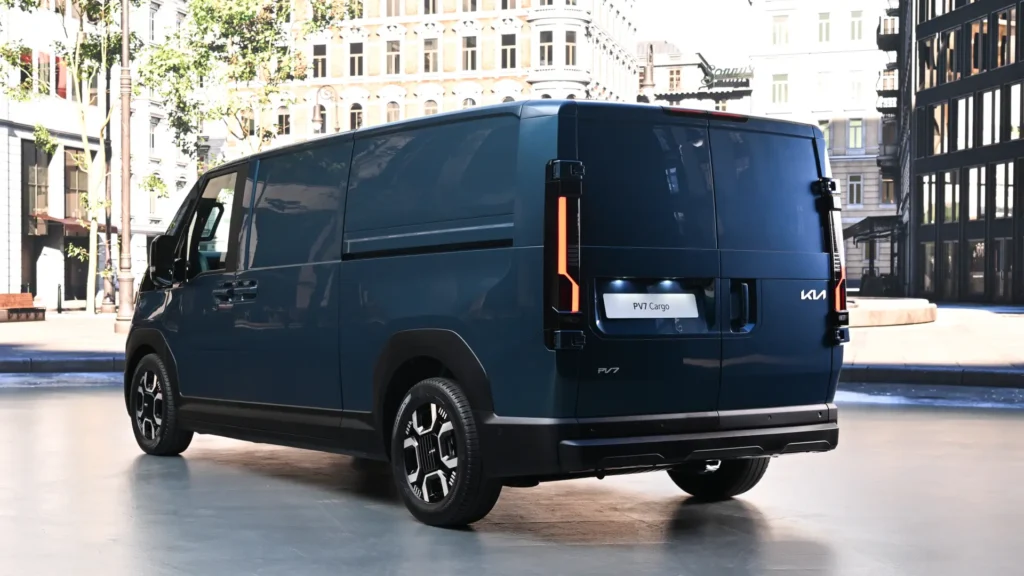
The PV7 Cargo Long unveiled at IAA Transportation measures 5,350mm long, 1,995mm wide and 1,990mm tall, with a 3,500mm wheelbase.
That places it around the middle of the conventional medium-van class, offering something close to long-wheelbase carrying capacity without stretching much beyond 5.3 metres.
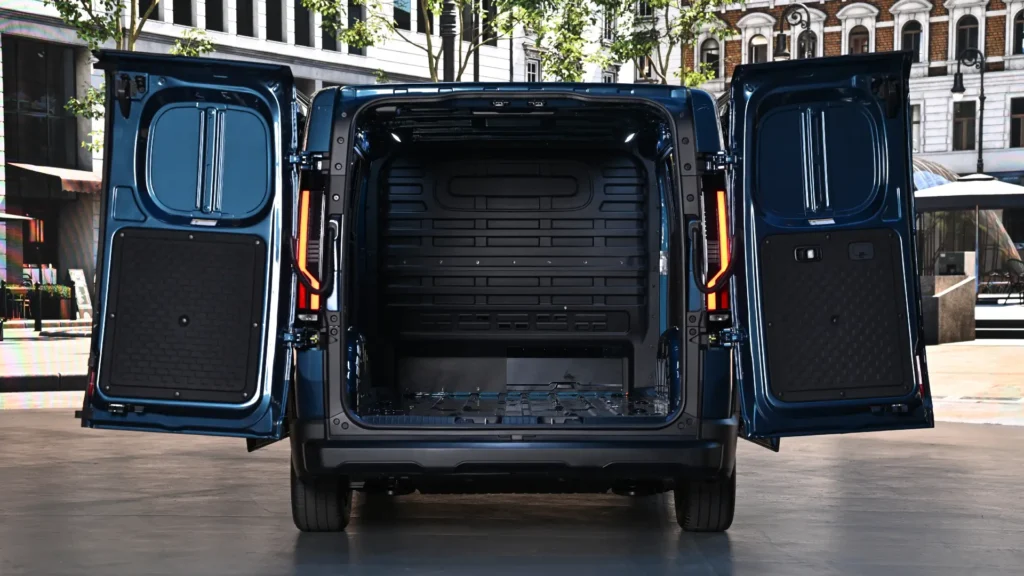
Cargo Long models provide 6.1m3 of load volume and can accommodate three 1,200mm by 800mm Euro pallets. A low 550mm loading height should also reduce the effort needed when repeatedly loading parcels, tools or heavier equipment.
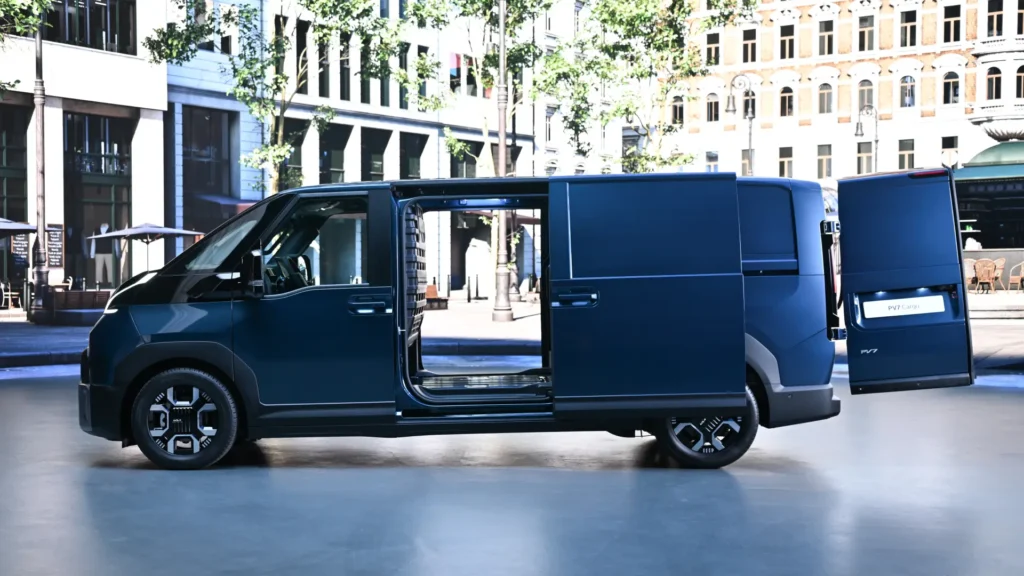
Maximum payload is provisionally rated at 1,165kg for the Long and 1,200kg for the shorter Compact model. Kia hasn’t revealed how the different battery packs or equipment levels will affect those figures, so don’t expect the headline figures to apply to every version.
The Cargo High Roof will increase maximum load volume to 8.0m3, pushing the PV7 towards the upper end of the medium-van sector without turning it into a full-sized rival to the Ford Transit or Renault Master — that will happen when the larger PV9 van arrives in 2029.
| PV7 Cargo Compact | PV7 Cargo Long | |
|---|---|---|
| Length | TBA | 5,350 mm |
| Width | TBA | 1,995 mm |
| Height | TBA | 1,990 mm |
| Wheelbase | TBA | 3,500 mm |
| Payload | 1,200 kg | 1,165 kg |
| Cargo volume | TBA | 6.1 m3 / 8.0 m3 |
How far will the Kia PV7 go on a charge?
Kia will offer two nickel cobalt manganese (NMC) battery packs, with capacities of 71.5kWh and 96.2kWh.
The larger battery gives the PV7 Cargo Long a targeted WLTP range of over 286 miles, putting the PV7 among the longest-range electric vans in its class, and ahead of the likes of the Ford E-Transit Custom (230 miles) and Vauxhall Vivaro Electric (219 miles).
Kia hasn’t supplied a range figure for the smaller battery or confirmed how much range will vary between the Compact, Long, High Roof and Passenger bodies.
The PV7 is based on Kia’s E-GMP.S commercial vehicle platform, using an 800V electrical architecture to support substantially faster charging than most existing electric vans.
Kia is targeting a 10–80% recharge in the mid-20-minute range when connected to a 350kW rapid charger.
A dedicated heavy-load driving mode can adjust the vehicle’s responses to suit different payloads, helping it maintain predictable performance and stability as the weight in the back changes.
Two charging ports could make depot life easier
One of the PV7’s more thoughtful features is its unusual dual-port charging arrangement.
A conventional AC and rapid DC charging port is fitted at the front, while buyers can specify a second AC port towards the rear of the vehicle. This won’t allow the battery to charge twice as quickly, but it should provide more flexibility when parking alongside depot chargers or using tightly arranged charging bays.
Where rapid charging isn’t essential — such as when parked overnight — operators won’t necessarily need to reverse every van into an allocated space or trail cables along its full length simply because the charging point is on the wrong side.
And when it is plugged into the AC charger, it’ll accept electricity at a rate of up to 22kW, meaning a full charge could be completed in a little over four hours.
Vehicle-to-Load capability will also allow the battery to power tools and equipment through sockets inside and outside the van. Peaking at 9.2kW, that’s powerful enough to run serious equipment, and not just charge a loptop.
Plenty of power, with all-wheel drive to follow
The most powerful PV7 drivetrain produces 272hp and 420Nm of torque, sent to the front wheels.
That’s a generous output for a commercial vehicle and considerably more than most medium vans. Putting that much power through the front axle could prove interesting in an unladen van, particularly in poor weather, but an all-wheel-drive PV7 is scheduled to join the range later.
However, Kia hasn’t indicated when — or if — it will arrive in Britain.
Practical touches beyond the headline figures
Kia has included several less glamorous features that could matter more to operators than screen sizes or acceleration.
Cargo models will be available with either full-opening twin rear doors or a conventional lift-up tailgate. The power-operated sliding door can close automatically when the driver walks away with the key, while its status can be checked remotely.
Individual cargo doors can be locked or unlocked independently, allowing access to one section of the van without necessarily exposing the entire load area.
A load-through bulkhead will also be available, extending the carrying length for narrow items. However, this will be limited to three-seat models.
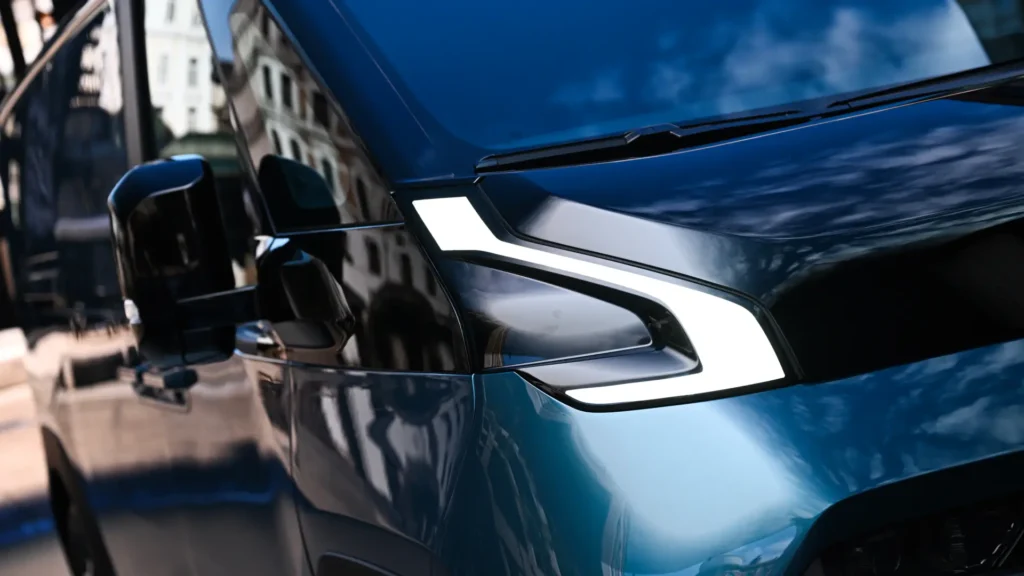
Replaceable bumper corners, wheelarch sections and door cladding should reduce repair costs following minor knocks.
Kia also plans a single electronic connector interface for specialist equipment, allowing approved conversions to be controlled through the van rather than relying entirely on separate switches and wiring.
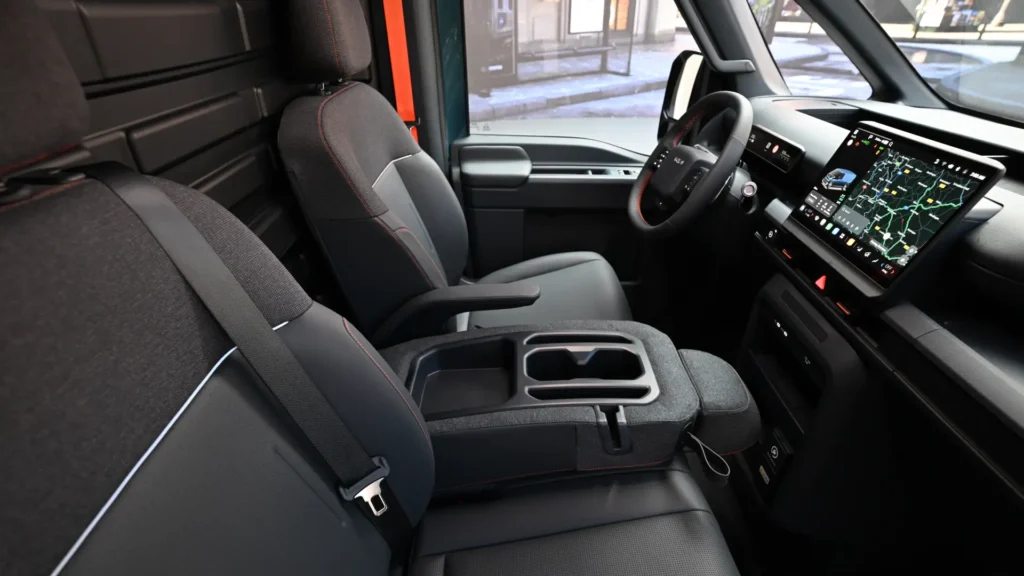
Two or three seater
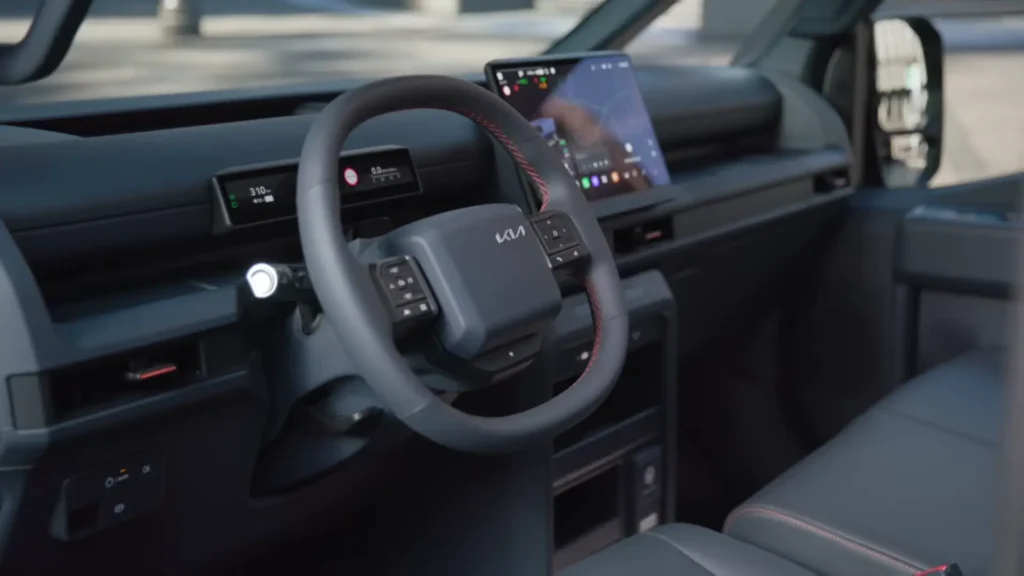
PV7 Cargo models will be offered with two- or three-seat cab layouts, although Kia hasn’t confirmed which will be available in the UK.
The three-seat version includes a folding centre seatback that becomes a work surface or open storage tray when it isn’t occupied.
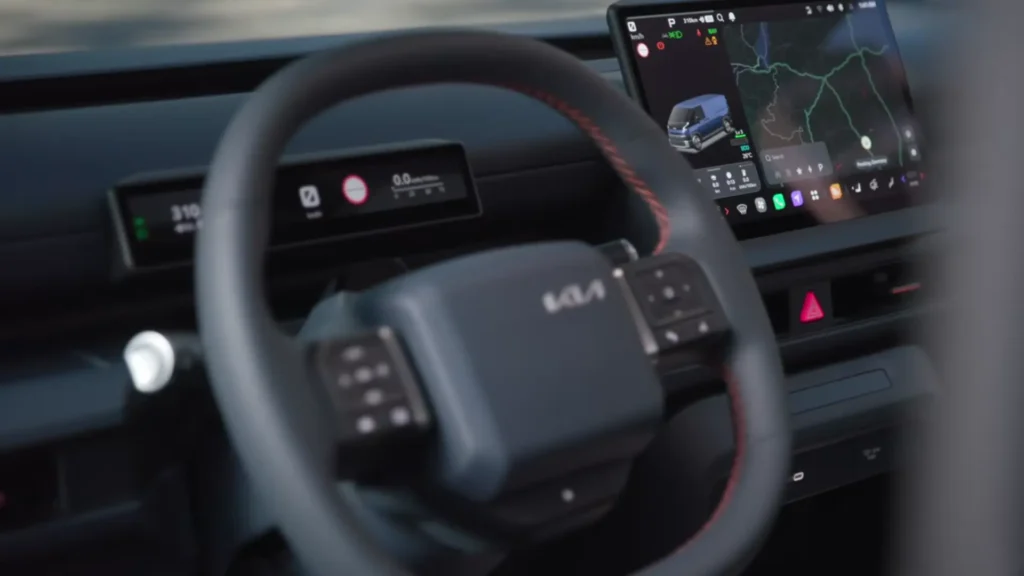
The dashboard combines a 12.9-inch driver’s instrument display and a 14.6-inch infotainment display with Kia’s Pleos Connect software, based on Android Automotive. This provides navigation, over-the-air updates and access to first- and third-party applications through an app marketplace.
Kia’s Gleo AI voice assistant will control vehicle, navigation and messaging functions using conversational instructions.
Thankfully, the company hasn’t placed every function on the touchscreen. Physical controls remain for frequently used features, while an A-pillar grab handle, revised seat position and carefully shaped step are intended to make repeated entry and exit less tiring.
Storage appears to have received similar attention, with open dashboard areas, overhead compartments and space intended for the paperwork, mobile devices and miscellaneous items that inevitably accumulate in a working van.
Fleet software and uptime support
The PV7 will connect to Kia’s Business Solutions Portal, bringing fleet management, charging, servicing and vehicle information together in one system.
Standardised fleet-management and vehicle-data interfaces will allow larger operators to integrate PV7 information into their existing software, rather than being forced to manage the Kia vans through an isolated platform.
Real-time monitoring, predictive diagnostics and proactive maintenance alerts are also intended to reduce unexpected downtime.
“The PV7 has been developed to give customers the flexibility to adapt as needs evolve,” said Sangdae Kim, executive vice president and head of Kia’s PBV business division.
“As a business-tailored tool engineered to deliver best-in-class EV performance, data-driven solutions and total service excellence, it will enable customers to improve work efficiency, enhance productivity and create greater value throughout the business lifecycle.”
Chassis cabs, conversions and more
Kia’s plans extend well beyond the initial panel van. A Chassis Cab will support specialist bodies and conversions, while Kia says the complete PV7 family will eventually grow to 23 variants.
Those will be produced through Kia’s dedicated PBV factory and conversion centre in Korea, supported by regional conversion partners.
Kia PV7 Cargo pricing and availability
Kia still has some important blanks to fill. UK prices, final range figures, towing limits, gross vehicle weights and battery-specific payloads remain unknown.
But the PV5 has already shown that Kia isn’t treating commercial vehicles as a side project. It was named International Van of the Year for 2026, and the larger PV7 brings the company into a much more heavily contested and commercially important part of the market.
If Kia can deliver the promised 286-mile range, 1.2-tonne payload and 25-minute charging without pushing the price too far, the PV7 should be taken seriously by operators looking beyond the established medium-van brands.

- Farizon SV electric van to gain faster charging and four-wheel drive - 18 September 2026
- Geely Farizon admits European expansion will be ‘extremely challenging’ - 18 September 2026
- Electric Van Man plugs market gap with UK’s first dedicated used electric van dealership - 17 September 2026