
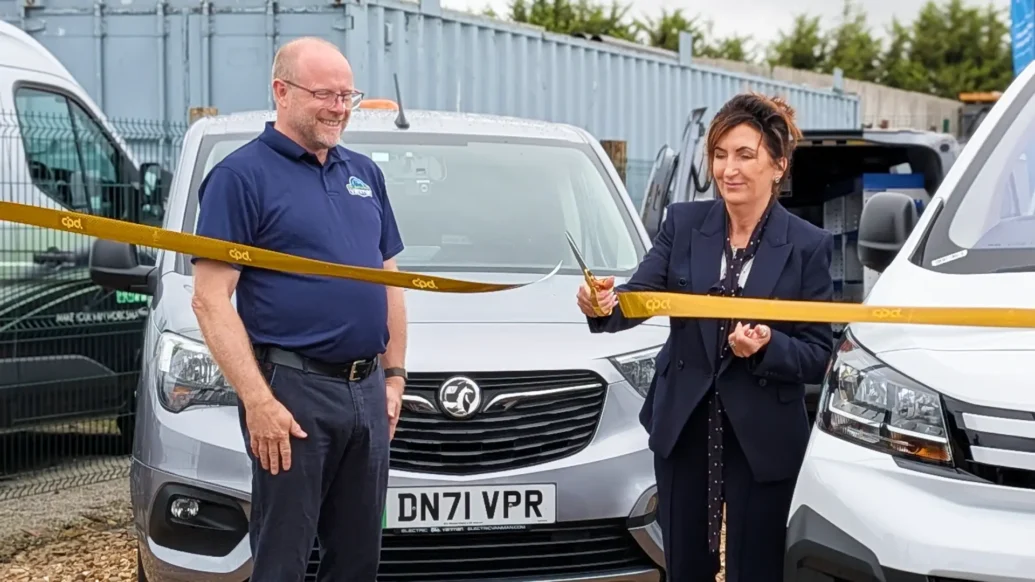
Electric Van Man, believed to be the UK’s first dealership dedicated to used electric vans, has opened in Bedfordshire, promising independent battery checks, detailed customer advice and a willingness to tell buyers when an EV is not right for them.
EV Café co-founder and commercial vehicle specialist Paul Kirby founded Electric Van Man to tackle the lack of confidence currently damaging the used electric van market.
The family-run business, based near Sandy, has been trading quietly during a soft-launch period but has now formally opened. Kirby’s son Jaden completed its first sale during that initial period, while his daughter Rachel and son Joel are also joining the company.
Kirby told Professional Van that creating something his family could eventually take forward was one motivation for turning his consultancy, training and media work into a standalone retail business.
“About six months ago, I really felt that I wanted to step into doing something that left something better behind,” he explained.
“If I build a business that is standalone from me and has the kids involved, then I’m leaving something better behind. But I’m also addressing an issue in the marketplace that is quite well known.”
Why is the used electric van market struggling?
Electric vans have suffered particularly heavily at auction, where uncertainty around battery condition, usability and future values has made many traditional buyers reluctant to take a risk.
Diesel vans are familiar territory for dealers and customers, who broadly understand their servicing requirements, mechanical warning signs and likely operating costs. Equivalent knowledge about used electric vans is far less widespread.
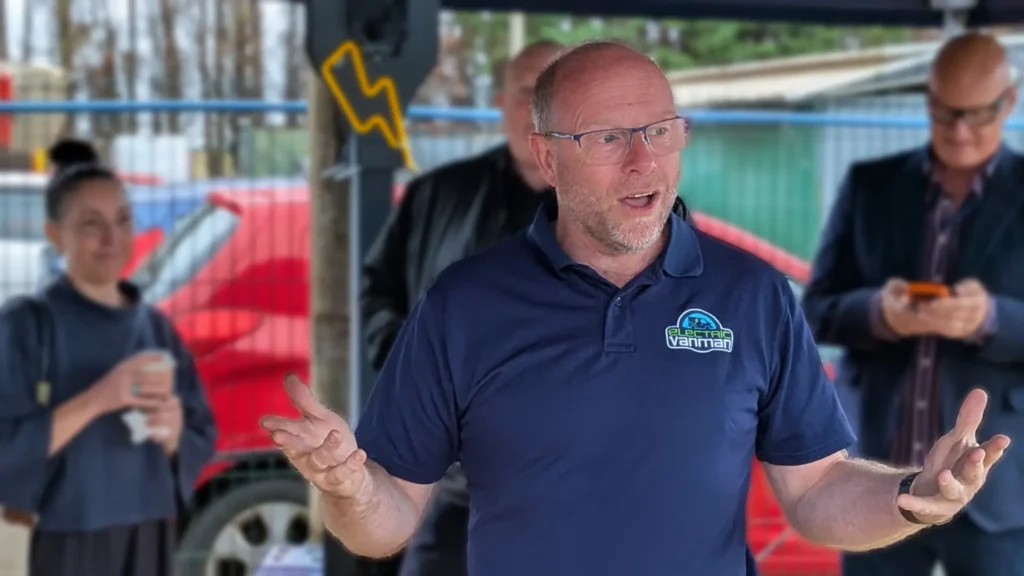
“I wanted to put the right information into the marketplace so that people can make informed decisions,” said Kirby
Electric Van Man will source vehicles directly from manufacturers, leasing companies and fleets rather than relying principally on auctions. It also has an agreement with Farizon allowing it to sell vehicles on the manufacturer’s behalf, although Kirby stressed that the business is not an appointed Farizon dealer.
He believes weak residual values have created an opportunity for smaller operators, with some nearly new electric vans now costing considerably less than comparable diesel models.
“These smash diesels into the middle of next week when it comes to value,” Kirby told guests at the launch. “People are saving hundreds of pounds a month.”
He cited one unnamed model for which a low-mileage used electric version costs around £21,500, against £26,000 to £27,000 for an equivalent diesel van of the same age and mileage.
Battery health independently checked
Every used electric van sold by the business will undergo an independent battery assessment by Aviloo, giving buyers a certificate showing the battery’s state of health.
The certification includes protection against unexpectedly large deterioration in battery health. Kirby said Aviloo would make a guaranteed £2,700 payment if degradation exceeded the agreed threshold during the warranty period.
“The great news is, Mr Customer, we’ve done an assessment of that battery health with an independent tester,” he said. “There’s your certificate of battery health, and we guarantee that it won’t drop below X. If it does, we’ll pay you £2,700. That builds a lot of confidence.”
Vehicles will also be supplied with a six-month warranty through Warranty Solutions Group, with extensions of up to two years available.
Electric doesn’t have to work for every van
Kirby argues that businesses frequently treat electrification as an all-or-nothing decision, abandoning the idea if an electric van cannot cover every route or replace every vehicle.
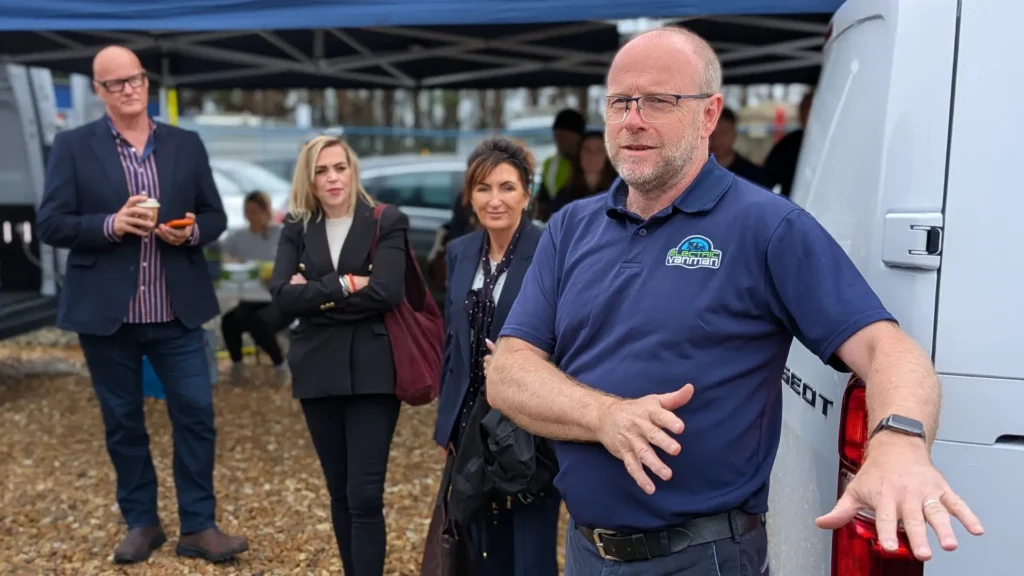
“I think people assume that, if a fleet has ten vans, electric needs to work for them all or not at all,” he explained. “What we know is that, within those ten, one or two could easily go electric. Another four, five or six might need a bit more work, while the final four could be trickier.”
Electric Van Man will use information about duty cycles, routes, charging access and operating costs to identify where an electric van can be used successfully.
“We have to get the use case right to match the need, provide the vehicle that meets that use case, and then we will see that,” Kirby added. “It’s helping people at least start the journey.”
Crucially, he insists that the dealership will advise customers against buying an electric van when it cannot meet their needs.
“If it is definitely wrong for them, I’ve got to tell them: ‘It’s definitely wrong for you,’” he said.
“I don’t want to sell a vehicle to somebody who then goes away and puts on my Google review that it didn’t work for them and they want to change it for a diesel. We want to put the right vehicle into the right hands.”
From single vans to larger fleets
The business initially expects most customers to buy one or two vehicles, although Kirby hopes it will eventually supply fleets buying used vans in much larger numbers.
“We want to sell one to hundreds,” he said at the launch. “We don’t want to sell hundreds to one.”
Electric Van Man aims to sell around 30 to 35 used electric vans by the end of the year, potentially increasing that to between 200 and 300 annually over the next two or three years.
Kirby said success would inevitably involve achieving sufficient sales to keep the business viable, describing the immediate ambition with typical bluntness as “not going bust and paying salaries”.
However, he said the broader measure would be whether Electric Van Man helps improve confidence and residual values across the used electric van sector.
“Success is the market having a sense that the electric van market is viable, is possible and is growing,” he said.
“It’s people driving the right van for their job and getting great value out of it.”

- Electric Van Man plugs market gap with UK’s first dedicated used electric van dealership - 17 September 2026
- Stellantis sets 2029 date for next-generation large van - 17 September 2026
- Ford puts Transit City to work with new chassis cab - 16 September 2026