

The Ford P100 was introduced to the UK in 1982 but had been available in South Africa for 11 years before then, where it was known as the Cortina Pickup. Early models were based on the Ford Cortina Mk V, despite the Sierra having just been launched, but 1987 saw a significant facelift when the Sierra’s aerodynamic style took over.
That first generation Ford P100 was built in South Africa, although production was shifted to Portugal for the second generation. These low, 4×2 single-cab pickups lost ground in the 1990s, with many operators switching to the new dedicated small panel vans like the Citroen Berlingo and Volkswagen Caddy, and sales of the Ford P100 ceased in 1993.

Ford P100: Engine and Driveline
The first-generation Ford P100s were fitted with a four-speed transmission and a 1.6-litre petrol engine, which produced up to 73hp and 117Nm of torque. However, the second-generation Ford P100 came with a five-speed manual transmission and a larger 2.0-litre ‘Pinto’ petrol engine. Power only improved marginally, rising to 74hp and 123Nm of torque. Diesel power was introduced in 1989, with the 1.8-litre turbocharged engine offering no more power (74hp), a little more torque (152Nm) and significantly improved economy.
That was a key attraction; at 33mpg, it was the most fuel-efficient one-tonne pickup on the market. In contrast, the 2.0-litre petrol powered model achieved just 25mpg.

Ford P100: Payload and Practicality
The load bed measured 2,098mm long by 1,373mm wide (and 1,097mm between the wheel arches), which meant it lost out to many of its rivals, such as the Vauxhall Brava. The gross vehicle weight was measured at 2,440kg and the kerb weight at 1,470kg, which means there’s around 970kg left for payload.
The maximum weight of the Ford P100 and its trailer (gross train weight) could not exceed 2,650kg. Given the 1,470kg, this limits the weight of the trailer to 1,180kg.

Ford P100: On the Road
One of the Ford P100’s greatest advantages, particularly the second generation, was its ride and handling. The front half of the vehicle was a monocoque frame from the Sierra, which meant it didn’t roll as much as the other one-tonne pickups and it held the roads relatively well.
The Sierra cab also had another advantage; it was far more refined and the noise and vibrations were notably lower than that of its competitors.
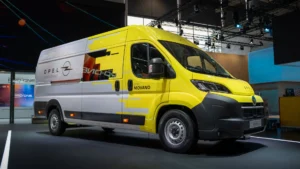
- Stellantis sets 2029 date for next-generation large van
- Ford puts Transit City to work with new chassis cab

- Kia PV7 reveal: Everything we know about Kia’s new electric van
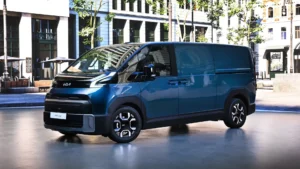
- Video: First look at the new Kia PV7 electric van
- Volkswagen gets serious with long wheelbase ID Buzz Cargo


- Driven: Nissan Navara N-Guard Review - 3 March 2020
- Great Wall Purchases GM’s Rayong Pickup Factory - 17 February 2020
- Hyundai Santa Cruz Pickup Due in 2020 - 16 February 2020