
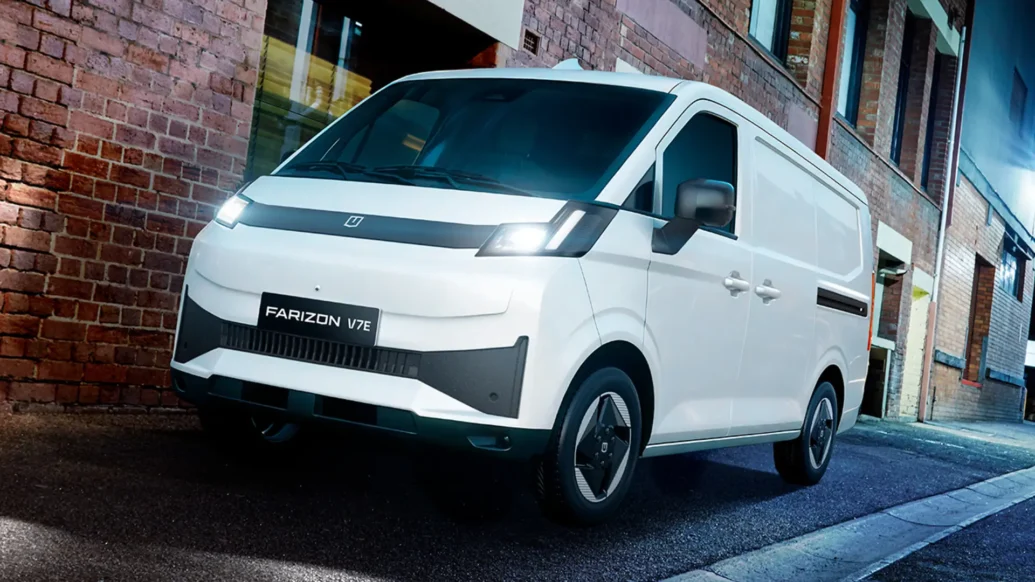
Electric van manufacturer Farizon is preparing to expand its UK range with the addition of the V7E. This new medium-sized electric van will sit below the recently launched Farizon SV.
The Geely-owned commercial vehicle brand confirmed last year that the V7E would join the UK line-up, broadening its electric van offering as the company continues to establish itself in the European market.
While final UK specifications have yet to be confirmed, newly released technical details provide a clearer picture of what operators can expect when the model arrives.
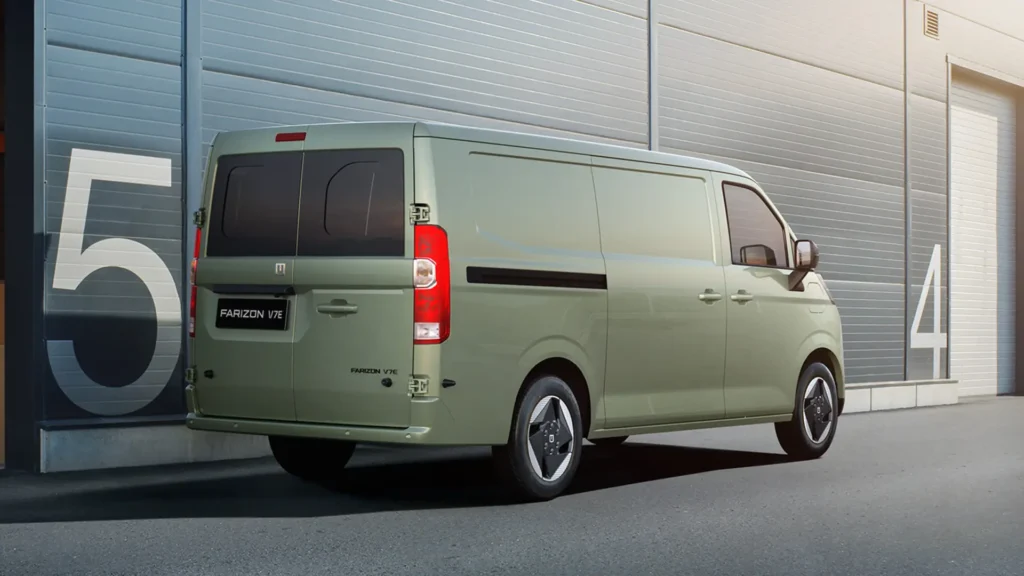
Farizon V7E is a mid-size electric van with 1.3-tonne payload
The Farizon V7E is positioned as a practical, work-focused electric van aimed at urban delivery operations and SME fleets.
The van offers a payload capacity of up to 1,300kg and around 7m³ of cargo volume, placing it firmly in the mid-size van segment currently dominated by models such as the Ford Transit Custom and the Stellantis-built Citroen Dispatch, Peugeot Expert and Vauxhall Vivaro.
A maximum load length of up to 3.26m and a low loading height promise to make the V7E suitable for courier work, tradespeople, and other operators carrying tools or parcels on high-frequency routes.
Its relatively compact footprint and tight turning circle are intended to make the van particularly well suited to urban deliveries and congested city environments.
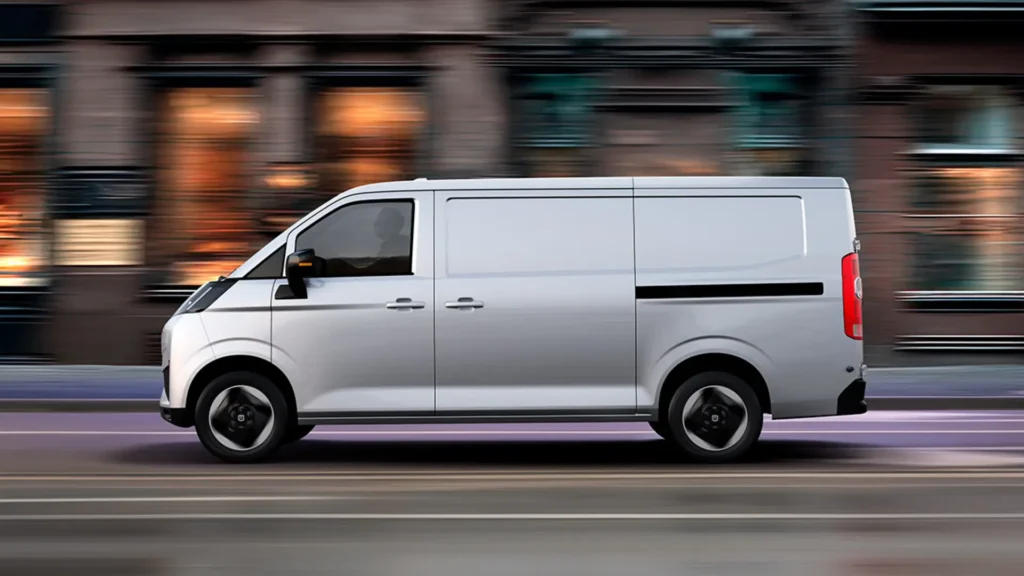
Electric powertrain designed for daily commercial use
Energy comes from a lithium iron phosphate (LFP) battery supplied by CATL, a chemistry increasingly used in commercial vehicles due to its durability and long cycle life.
In its initial specification, the Farizon V7E uses a 51.4kWh battery, with a claimed driving range of up to 286 miles under the generous Chinese CLTC test cycle. More conservative WLTP range figures are expected once the van is homologated for Europe, which Professional Van expects to be around 200–225 miles.
Rapid charging capability is competitive, with the battery able to charge from 30% to 80% in around 15 minutes under optimal conditions, suggesting a maximum charging rate of about 100kW.
Farizon says the vehicle has been engineered specifically around commercial usage patterns, including frequent stops, daily loading, and high utilisation.
Focus on usability rather than EV novelty
Rather than presenting the V7E purely as an electric vehicle, Farizon is positioning it as a conventional work van that happens to be electric.
The model has been developed with an emphasis on payload, cargo access and everyday usability, with electric power intended to support lower running costs and quieter operation rather than redefine how businesses operate their vehicles.
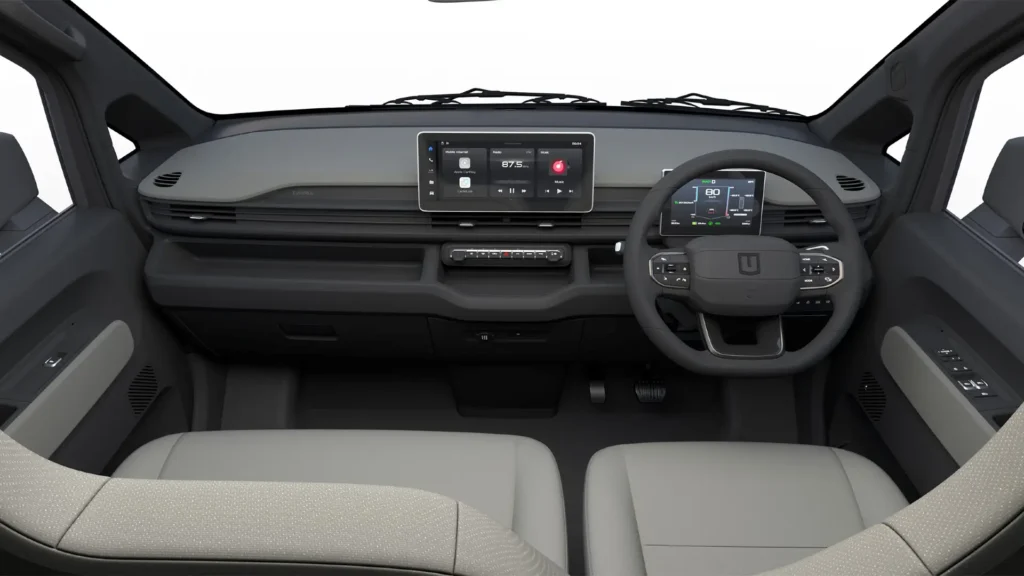
Like the larger SV, the V7E will feature modern driver assistance systems, connectivity features and smartphone integration designed for everyday commercial use.
Second model as Farizon eyes expansion
The V7E will become the second model in Farizon’s UK range following the launch of the SV large electric van.
Speaking at the opening of Farizon’s UK headquarters and flagship dealership in Park Royal, London, Calum James, general manager of Farizon UK, said the company was planning to broaden its portfolio once the SV had established itself with fleet customers.
The V7E is part of a broader product strategy that will see Farizon expand its commercial vehicle offering over the coming years.
The SV range is expected to grow in 2027 with the addition of a chassis cab version aimed at specialist conversions, while further variants of the large electric van are also planned.
Beyond that, Farizon is developing an all-new model for the car-derived van segment expected around 2028.
The company’s wider commercial vehicle portfolio in China also includes trucks and buses, which could potentially reach European markets in the future, depending on demand and regulatory requirements.
Farizon V7E launch expected in 2026
Exact UK specifications, pricing and battery options for the Farizon V7E are expected to be confirmed during 2026 ahead of the model’s arrival in the UK market.

- KGM gains new Stamford outlet as TC Harrison joins network - 27 August 2026
- Iveco eSuperJolly First Drive: Familiar van, different proposition - 13 August 2026
- Mercedes Vito Sport-X brings sporty makeover to Crew van range - 12 August 2026