
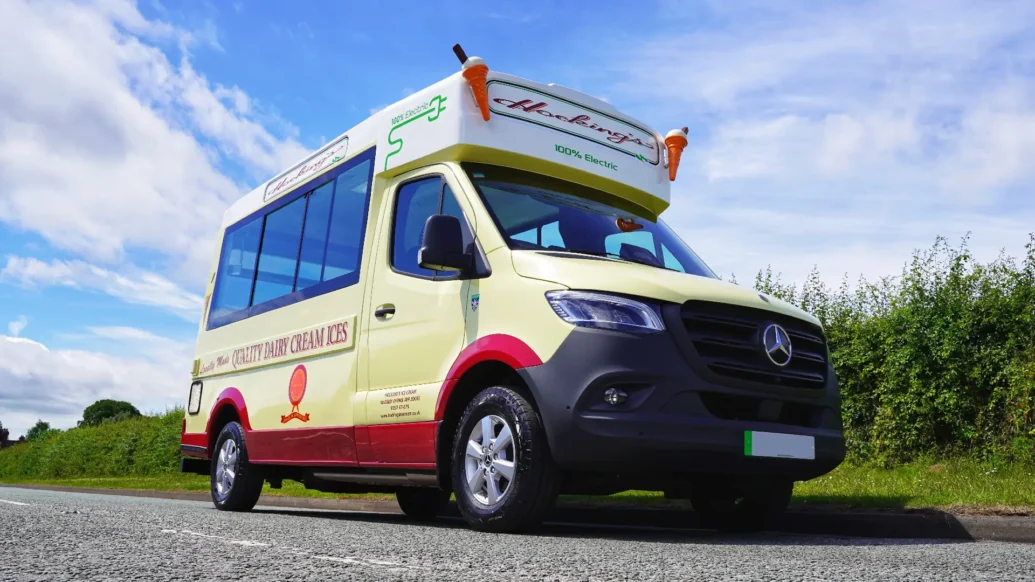
Britain’s ice-cream vans are going electric, with Whitby Morrison delivering what it claims is the world’s first fully certified purpose-built electric model based on a Mercedes-Benz eSprinter chassis cab.
Unlike a conversion of an existing diesel van, it has been built and registered as a new electric ice-cream van. More importantly for anybody living within earshot of a popular trading pitch, it can operate without a diesel engine or separate generator rumbling away in the background.
The chimes, however, appear to have survived.
Electric power for the ice-cream machine
Choosing an electric van as the base vehicle is only the first step. An ice-cream van must also provide enough electricity to run its soft-serve machine, refrigeration, freezers, lighting and other equipment throughout a trading day.
Whitby Morrison has combined the eSprinter chassis with its own ePower management system, developed specifically to supply the onboard equipment without relying on a conventional auxiliary generator.
The company says the system can keep the ice-cream machine, freezers and refrigeration operating throughout the working day.
The completed van produces no tailpipe emissions and could potentially trade in some indoor locations.

Built on the Mercedes eSprinter
The conversion uses the Mercedes-Benz eSprinter 414 chassis cab with a maximum authorised mass of 4.25 tonnes.
That higher weight limit matters because batteries, refrigeration equipment, the body, and a full load of ice cream can quickly consume the cargo capacity of a conventional 3.5-tonne van.
Mercedes offers the underlying eSprinter with a combined WLTP range of up to 274 miles, depending on its battery and body specification.
For many operators, daily mileage will be relatively modest, and the vehicle can return to a base for overnight charging. The energy consumed while stationary and serving customers is likely to prove more important than its outright driving range.

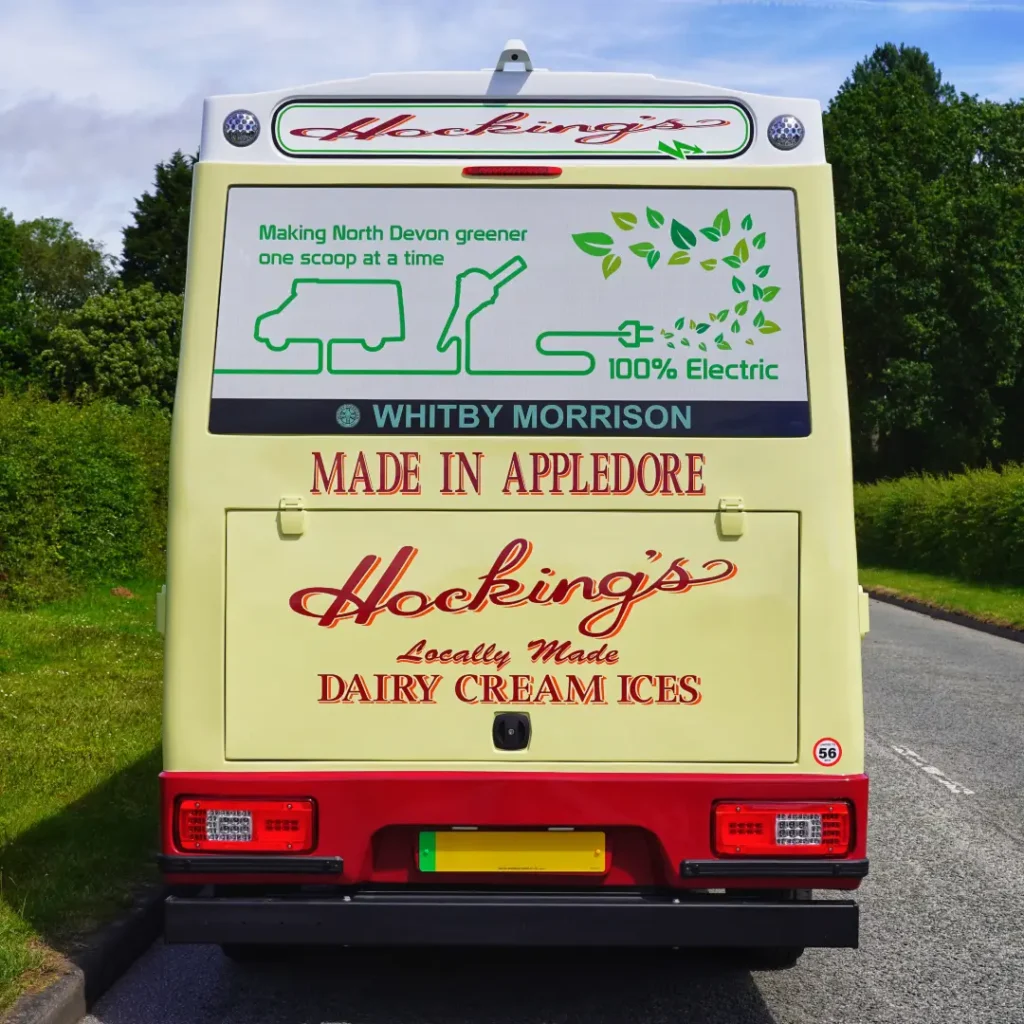
First van delivered to Devon
The first vehicle has gone to Hocking’s of North Devon, a family-run ice-cream business with longstanding links to Whitby Morrison.
Ed Whitby said: “Every so often, a vehicle comes along that feels like a real turning point. This is one of those moments.
“Our purpose-built electric ice-cream van is developed to meet the needs of real operators while helping move the industry towards a cleaner and quieter future.”
Whitby Morrison is now taking enquiries from other operators, although it hasn’t announced pricing or production lead times.
There are still important questions to answer about payload, auxiliary battery capacity and real-world operating time. Even so, this is more than a fanciful concept: it’s an approved, registered vehicle already heading out to sell actual ice cream.
And if electric power means enjoying a 99 without an idling diesel engine providing the background music, that sounds pretty sweet to us.

- Van tyre advisories double risk of dangerous defect at next MOT - 5 November 2026
- New 292-mile Renault Trafic E-Tech electric prices start from £38,000 - 5 November 2026
- French Renault Trafic E-Tech pricing offers clues ahead of UK launch - 3 November 2026