

Stellantis is developing hybrid, plug-in hybrid and range-extender commercial vehicles as it prepares to offer van operators a broader choice beyond diesel and fully electric models.
Emanuele Cappellano, head of Stellantis Pro One, confirmed the work in an exclusive interview with Professional Van at IAA Transportation in Hanover.
He said the commercial vehicle market was not moving towards fully electric models as quickly as legislation demanded, making intermediate technologies increasingly important.
“Because electrification is not progressing at the pace required by regulation, we strongly support a flexible approach to powertrains,” Cappellano told us.
“We are working on hybrid, we are working on plug-in hybrid, and we are working on range-extender solutions. We still need to provide customers with quite a wide freedom of choice because the market needs time to mature towards electrification.”
What is Stellantis developing?
Stellantis hasn’t revealed which vans will receive the different powertrains or when the first models will reach production.
However, Eric Laforge, senior vice president of Stellantis Pro One, told the IAA audience that the company’s next-generation commercial vehicle platforms would accommodate powertrains ranging from electric to internal combustion, with a strong focus on hybrid systems.
The strategy could result in several levels of electrification across the Citroen, Fiat, Peugeot and Vauxhall commercial vehicle ranges.
A conventional hybrid could reduce fuel consumption and emissions without requiring operators to recharge it, while a plug-in hybrid would provide a useful electric range for local work while retaining an engine for longer journeys.
A range-extender would work primarily as an electric vehicle but use a combustion engine to generate electricity once the battery reaches a low state of charge. This could allow operators to complete longer or less predictable routes without relying entirely on public charging infrastructure.
Technical details haven’t been released, and Stellantis hasn’t said whether it will use diesel or petrol engines in its plug-in hybrid and range-extender systems.
Will the new large van offer hybrid power?
The announcement comes as Stellantis begins work on its next-generation large van, with production targeted to start at the Atessa plant in Italy in early 2029.
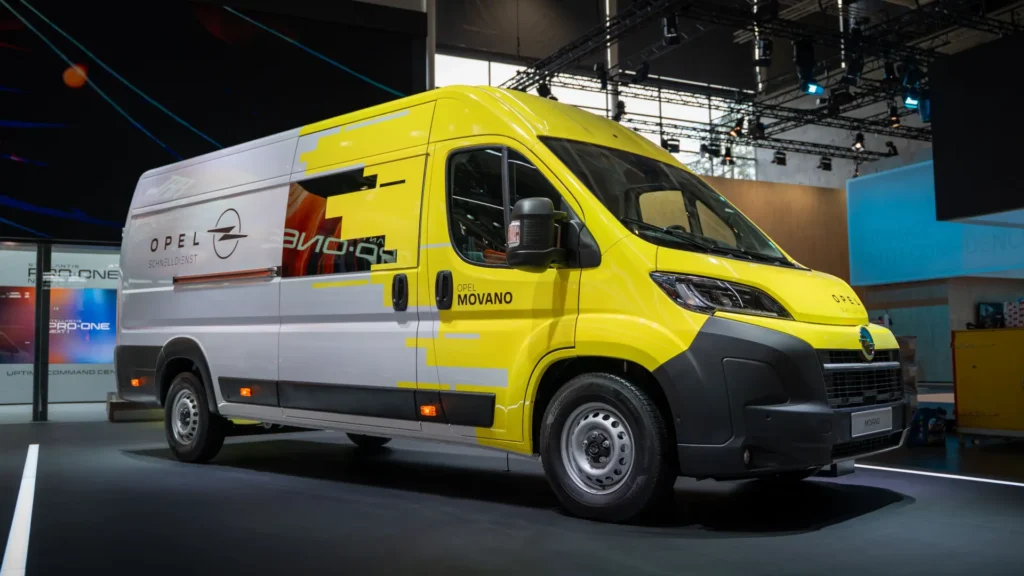
That vehicle is expected to underpin replacements for the Citroen Relay, Fiat Ducato, Peugeot Boxer and Vauxhall Movano. However, while the timing makes it seem obvious, Cappellano stopped short of confirming that hybrid, plug-in hybrid, or range-extender powertrains would be fitted to the new model.
Stellantis is planning 11 new commercial vehicle models by 2030, covering several regions and vehicle types. That gives the company multiple opportunities to introduce the technology across its compact, medium and large van ranges.
Cappellano said different levels of hybridisation would form part of the wider Stellantis product plan, alongside cheaper batteries, longer electric ranges and faster charging.
“Stellantis will move forward with hybrid solutions, as well as batteries that will become more affordable than today’s batteries,” he said.
“We will probably extend the range, while the industry is also working on fast-charging solutions.”
Why is Stellantis turning to hybrid vans?
Cappellano believes there remains a mismatch between the speed of regulation and the vehicles operators are prepared or able to buy.
Battery-electric vans work effectively on predictable urban and depot-based routes, but businesses covering longer distances face tougher decisions about range, charging time, and infrastructure.
This is particularly important for owner-operators and small companies, which may not have access to depot charging or spare vehicles to cover lengthy charging stops.
“If I am a small operator with one, two or three vehicles, I want to be sure I can cover the distance affordably,” Cappellano explained.
“I need to be able to recharge without affecting my efficiency and I need to know the infrastructure is available. I cannot wait two hours to charge my battery.”
Hybrid and range-extender vans could reduce those operational barriers while still cutting fuel consumption and allowing some journeys to be completed electrically.
They would also give Stellantis more flexibility as emissions rules tighten but demand for battery-electric vans remains below the levels expected by legislators.
The key questions now are which Stellantis vans will receive the new powertrains, how much electric-only range they will provide and, crucially, whether their additional complexity can be delivered at a price operators are willing to pay.

- French Renault Trafic E-Tech pricing offers clues ahead of UK launch - 3 November 2026
- From ice cream to river rescue: Iveco reveals Mission Awards finalists - 2 November 2026
- Tata Motors takes control of Iveco with 89% stake - 2 November 2026