

Did you know your pickup truck might be limited to van-like speed restrictions? For years, pickup truck drivers in the UK have assumed they’re governed by the same speed limits as cars, thanks to the belief that all pickups fall under the ‘dual-purpose vehicle’ classification. However, Professional Pickup can reveal that this isn’t always the case — and most modern pickups are legally required to follow lower limits due to their weight.
What is a dual-purpose vehicle?
The UK’s Road Vehicles (Construction and Use) Regulations 1986 set out the criteria for dual-purpose vehicles. To qualify, a vehicle must be “constructed or adapted for the carriage both of passengers and of goods” and that its “unladen weight does not exceed 2040kg”.
This 2,040kg threshold is significant. It means that any pickup exceeding this weight no longer qualifies as a dual-purpose vehicle and instead falls under the standard Light Commercial Vehicle (LCV) classification. As a result, it must adhere to stricter speed limits:
| Pickup speed limits | Cars | Under 2,040kg | Over 2,040kg |
|---|---|---|---|
| Built-up areas | 30 mph | 30 mph | 30 mph |
| Single carriageways | 60 mph | 60 mph | 50 mph |
| Dual carriageways | 70 mph | 70 mph | 60 mph |
| Motorways | 70 mph | 70 mph | 70 mph |
Are modern pickups too heavy?
The regulations date back decades, yet pickups have changed considerably over the years. With the rise of larger, more robust trucks loaded with features like additional safety tech, soundproofing, and luxurious interiors, the unladen weight of most models has crept past the 2,040kg mark.
In 2005, a Ford Ranger double cab weighed in at just 1,710kg and still managed to include all-wheel-drive and carry up to 1,135kg of cargo. Twenty years later, the lightest Ranger double cab tips the scales at 2,123kg — an increase of more than 24% — while the heaviest models go beyond 2.5 tonnes.

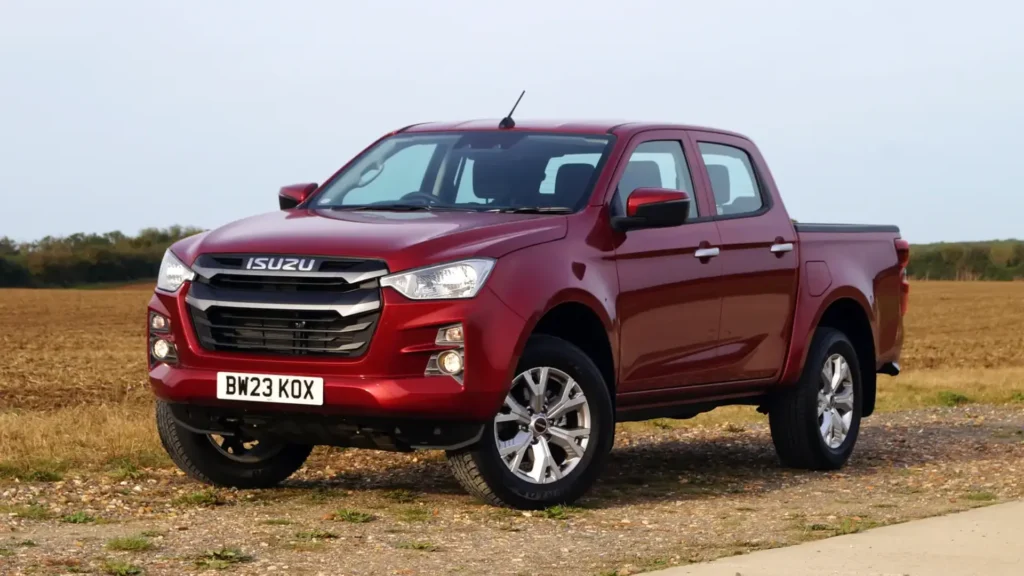
Of the current pickups on sale in the UK, only the Isuzu D-Max (except for the Arctic Trucks AT35 version) remains under the 2,040kg limit, allowing drivers to use the higher dual-purpose speed limits. However, popular models such as the Ford Ranger, Volkswagen Amarok, Toyota Hilux, Maxus T90EV, and KGM Musso all exceed the weight threshold in every specification and are therefore classed as LCVs under UK law.
Industry confusion
Our research shows that dealers aren’t informing potential buyers of the issues they may face when picking a double-cab pickup. Not one dealer we visited across all brands informed us about the lower limits, and only four in 10 were aware of the legislation when questioned about it.
Uninformed buyers might only discover the truth after getting an unexpected fine or penalty points on their licence.
It’s unclear if this communication gap is caused by a lack of training, knowledge, or simply a desire to secure a sale, but it can leave customers in a very tricky situation.

The DfT’s response
The Department for Transport itself appeared surprised by the implications of its own regulations. A spokesperson previously acknowledged the outdated nature of the 2,040kg limit, which stems from an old imperial measure of two tons.
“It’s news to us that some pickups have gone over this weight,” the spokesperson previously told Professional Pickup. “We don’t intend to change the regulation for the time being, but if someone were to challenge it after receiving a fine, we’d have to review the classification.”
Since that date, no changes to the legislation have been put forward, and there has been no discussion about potential updates held in parliament.
In an age where electric SUVs can outsize pickups in weight, the government’s reluctance to update these rules feels more outdated than ever.
What does this mean for pickup drivers?
For drivers, the key takeaway is to check the unladen weight of their pickup. This information can usually be found in the vehicle’s specifications or VIN plate. If the figure exceeds 2,040kg, you must follow the LCV speed limits to avoid fines or penalty points.
Details are also on the vehicle’s V5C logbook, although, to add to the confusion, the figure will be slightly higher as it includes a tank of fuel.
Drivers of single cab pickups don’t need to be concerned by the weight of their vehicle, as they’re considered to be LCVs and must adhere to the lower limits.
Is enforcement lacking?
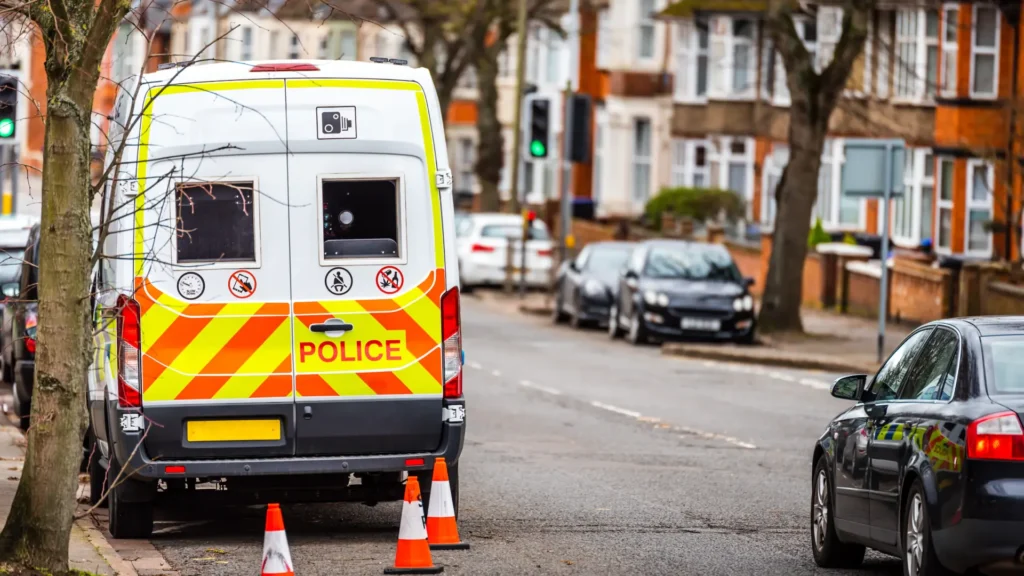
Despite these regulations, there doesn’t appear to be widespread reporting of fines specifically targeting pickup drivers for exceeding LCV speed limits.
Anecdotal evidence suggests that traffic officers making stops aren’t enforcing the lower limits on pickup drivers, which raises questions about whether agencies are aware of the discrepancies in modern pickup weights or choose not to strictly enforce the limits.
It’s risky to assume that will always be the case. A crackdown could result in fines and points for unsuspecting drivers.
Should pickup speed limits be updated?
The law’s reliance on an outdated weight limit raises questions about its relevance in today’s automotive landscape. Modern pickups are designed for versatility, balancing workhorse utility with passenger car comfort, but the 2,040kg ceiling doesn’t reflect this evolution.
Several industry voices and drivers have called for the threshold to be raised to at least 2,500kg, bringing more vehicles into the dual-purpose category. However, the DfT has not publicly moved to update the regulations.
If you drive a pickup in the UK, it’s crucial to understand the regulations that apply to you — especially if your vehicle’s unladen weight tips the scales above 2,040kg. Until the DfT revises the legislation, drivers should stay informed to avoid being caught out.
At Professional Pickup, we’ll continue to monitor any changes to this regulation and keep you updated, including detailing the kerb weights of new vehicles as they come to market. In the meantime, knowing your vehicle’s specs could save you from an unwelcome surprise.
| Current affected pickups | Current unaffected pickups |
|---|---|
| Ford Ranger | Isuzu D-Max* |
| KGM Musso | |
| Maxus T90 EV | |
| Toyota Hilux | |
| Volkswagen Amarok |
| Previous affected pickups^ | Previous unaffected pickups*^ |
|---|---|
| Mercedes-Benz X-Class (2018–2020) | Great Wall Steed (2012–2017) |
| SsangYong Musso (2016–2023) | Isuzu Rodeo (2003–2012) |
| Mitsubishi L200 (2019–2021) | |
| Nissan Navara (2014–2021) | |
| SsangYong Korando Sports (2012–2016) | |
| Toyota Hilux (1989–2016) |

- Volkswagen Transporter gains first plug-in hybrid option - 22 July 2026
- Iveco banking on truck-style backup for eJolly and eSuperJolly - 22 July 2026
- UK van market returns to growth but electric transition still lags - 13 July 2026