
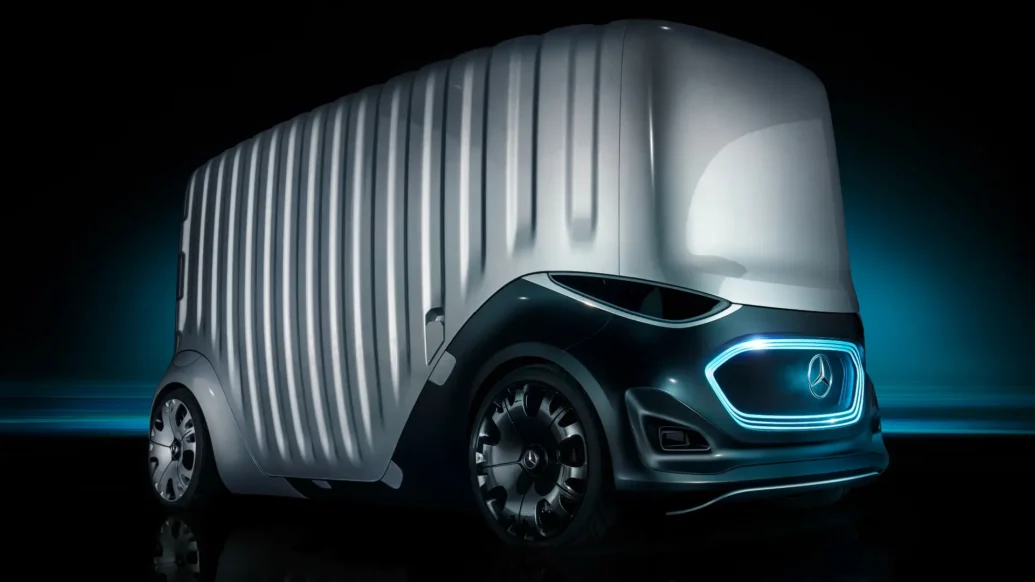
Mercedes has questioned whether autonomous delivery vans make commercial sense, even as several manufacturers use the IAA Transportation show to demonstrate driverless vehicles and delivery concepts.
Thomas Klein, head of Mercedes-Benz Vans, told Professional Van that Level 4 autonomous-driving technology remains expensive and that potential customers have yet to identify how they could make money from it.
Level 4 automation allows a vehicle to operate without a driver within defined conditions or operating areas. Its potential commercial applications include moving goods between logistics centres, urban deliveries and automated transport around industrial sites.
However, Klein said the technology alone does not solve every part of a delivery operation.
“Equipping vehicles with Level 4 technology is very expensive,” he said. “The customers that we talk to basically look at it from a commercial perspective and say, ‘It’s not there yet. We don’t know how to monetise it.’”
Parcel delivery seems like an obvious application, particularly as operators contend with driver shortages and rising delivery costs. Klein argued that removing the driver from the vehicle doesn’t eliminate the need for somebody to complete the final part of the job.
“Parcel delivery should be ideal, but then how does that parcel get from the vehicle to the doorstep?” he asked. “We still need to put somebody on there.”

Mercedes continues to study autonomous vans
Mercedes has previously explored automated delivery vehicles, including 2018’s Vision Urbanetic pictured at the top of the page, and Klein said it continues to examine the technology with partners. However, the company isn’t ready to announce a commercial autonomous-van programme.
“We explored that territory a few years ago, so we understand what is possible and also what the limitations are,” he said.
“Technology has changed and progressed. What we do is look at that technology and those ideas with partners. We feel that when we get to the point where you could deploy it and monetise it for the partners’ benefit, we would be ready to do that.”
Klein said several of the autonomous use cases demonstrated at IAA Transportation were similar to ideas Mercedes had already examined. The manufacturer chose not to present another concept in Hanover because it couldn’t yet attach a credible commercial commitment to it.
“We haven’t shown anything here, not because we’re not looking at it, but because I feel the time is not right to go out and make a promise,” he said.
Regulation presents another obstacle. Klein suggested that Level 4 technology could ultimately find a role in passenger transport before it becomes commonplace in commercial delivery fleets, but said European legislation wasn’t yet ready for widespread deployment.
Mercedes’ position doesn’t mean it has abandoned autonomous commercial vehicles, though. Instead, the manufacturer appears content to allow the technology, legislation and potential business models to develop before committing to a product.
It also leaves operators with a question: even if a van can drive itself, does it save enough money to justify the technology?

- Fiat Doblo tops first Warrantywise used van reliability index - 8 October 2026
- Van market grows 4.8% in September as electric registrations reach record high - 5 October 2026
- Citroen Berlingo goes to the dogs with Pawlingo concept - 2 October 2026