

Renault has revealed the full production design of the all-new Trafic E-Tech Electric at the Solutrans show in Lyon, confirming the final look and technical specification of its next-generation electric medium van for 2026.
It’s the first model built on a new Software-Defined Vehicle architecture from Ampere (Renault Group’s dedicated EV division) and is the first member of Renault’s completely refreshed family of electric LCVs, which will later include the Estafette and Goelette. After months of prototypes and early previews, this is the first time we’re seeing the finished van, slated to arrive on UK roads in late 2026.

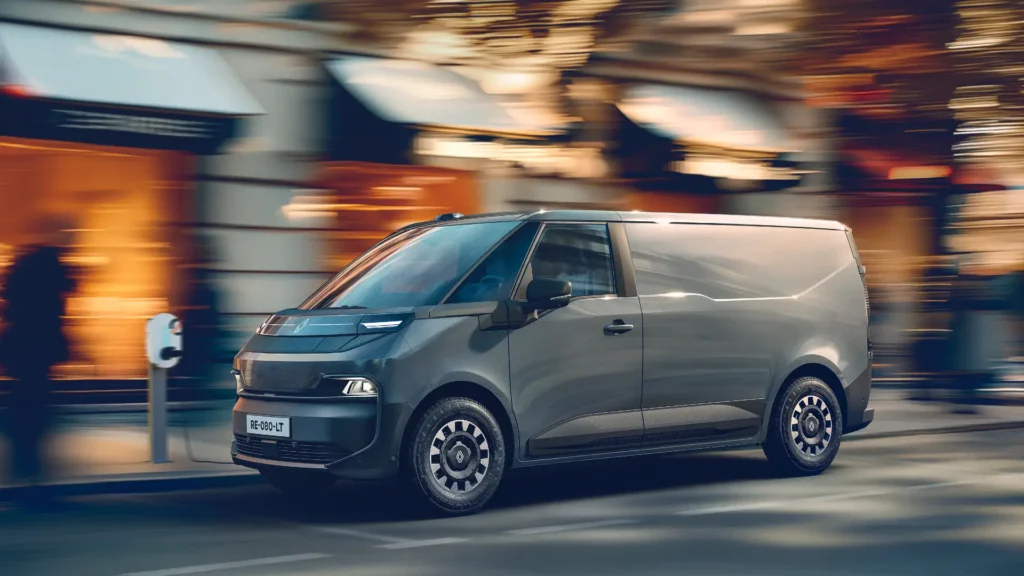
The new Trafic is a clean-sheet design, moving away from the diesel-based platform of the outgoing model and onto a dedicated electric ‘skateboard’ structure. With the motor mounted at the rear and an exceptionally short front overhang, Renault has engineered a van that turns almost like a small car, delivering a turning circle close to that of a Clio.
Despite this urban agility, both versions of the Trafic offer competitive load space: the L1 model measures 4.87m and provides 5.1m3 of capacity, while the longer L2 stretches to 5.27m and offers 5.8m3 of load volume. Critically for urban operators, both are just 1.90m in height, enabling trouble-free entry into multi-storey car parks or other similarly height-restricted areas.

The production design closely follows the concepts shown earlier this year. The full-width LED light bar, floating body-colour panel and textured black cladding all appear unchanged, and the steep, visor-like windscreen remains a central part of the styling. Renault has retained the laser-pattern detailing on the lower plastics, giving the van a more deliberate, modern appearance. At the rear, a new LCV light signature appears for the first time, with vertical LED elements flanking asymmetrical rear doors.
Interior, technology and load space
The new Trafic E-Tech introduces a cabin built around the new SDV electrical architecture. A wide tubular beam runs across the dashboard, anchoring the digital instrument cluster and the large 12-inch infotainment screen, which is angled towards the driver. This system uses the latest openR evo software with Google built in, and includes navigation that considers vehicle height, load, and road restrictions.

Storage looks like it remains a strong point, with Renault incorporating numerous cubbies, trays and shelves, including a deep full-width storage area beneath the windscreen for notebooks, jackets and daily work items. The cabin also uses a significant proportion of recycled materials, with Renault targeting over 23% recycled content overall and half of the seat fabric made from recycled fibres.
Because the SDV platform places a powerful central computer at the heart of the van, features can be added or upgraded later. Operators will be able to activate systems such as Google services, additional camera functions or even climate control remotely or during scheduled maintenance, while Renault can continue improving the van’s software long after delivery.
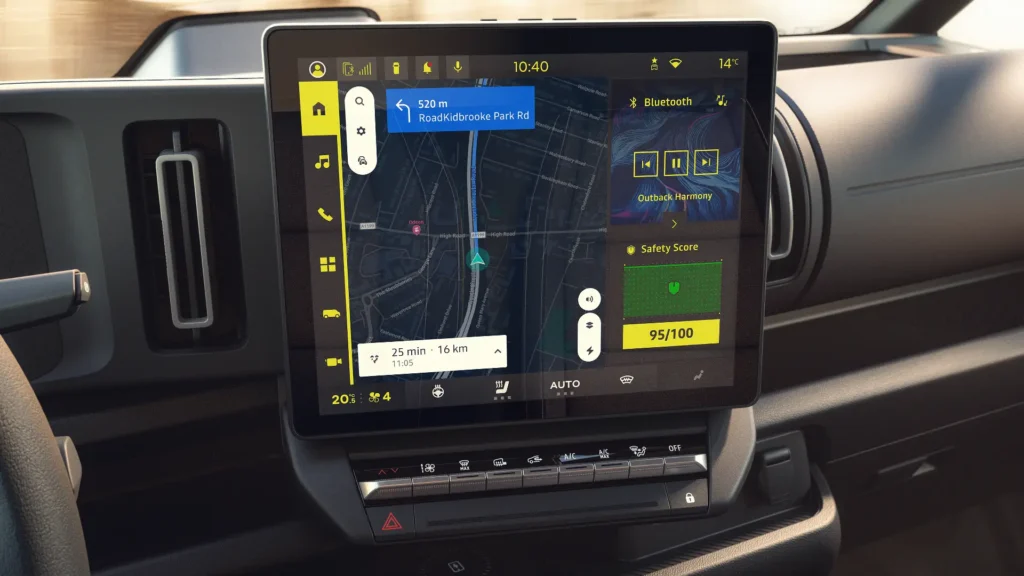
The SDV platform also allows the expansion of Renault’s Convertor Companion system. Bodybuilders and converters will now be able to integrate their controls and equipment directly into the Trafic’s 12-inch screen without needing extra switches or aftermarket modules scattered around the cab. Emergency services, utilities and fridge-van specialists should find this especially useful, as it reduces installation complexity and makes conversions feel far more integrated.
Renault will be able to handle core factory conversions at its Sandouville plant in France through its Qstomize division. This should reduce delays for popular formats such as tippers, flatbeds, platform cabs and box vans, while more specialist work will continue through Renault’s wider Pro+ network of 300 approved bodybuilders.

A new driver identification function also arrives, allowing fleet drivers to log into a van simply by scanning a QR code on the dashboard, eliminating the need for add-on dongles or ID modules.
The van is expected to offer towing of up to two tonnes and a payload of around 1.25 tonnes once homologation is complete.
Powertrain, range and charging
Two battery options will be available. High-mileage operators will be able to specify the long-range nickel–manganese–cobalt pack, offering around 280 miles of WLTP range. A more affordable lithium-iron phosphate pack will follow, promising roughly 215 miles and lower operating costs for urban fleets. Both support Renault’s new 800-volt charging system, which can take the battery from 15 to 80% charge in around 20 minutes, and recover more than 160 miles of driving range in the process.
The Trafic also supports both vehicle-to-load and vehicle-to-grid capability, allowing operators to power tools directly from the van or feed energy back into depot infrastructure where systems support it.
Power comes from a new Renault-developed motor producing 150kW (204hp) and 345Nm of torque.
Safety and driver support
Renault is boosting safety tech on the new Trafic, introducing its Safety Coach and Safety Monitor systems. Using a combination of sensors and artificial intelligence, the van evaluates driving behaviour on each journey, scoring the driver on speed, distance keeping, lane discipline and attention. It then provides tailored feedback aimed at reducing risk and improving overall safety. For fleets, features like this can also support training programmes and may help lower insurance costs.

Renault Trafic E-Tech 2026 launch and availability
The Renault Trafic E-Tech looks like an important new arrival, combining unusually strong range figures with rapid charging, high payload potential and software integration that fleet managers increasingly rely on.
Renault also suggests that the ability to add new features over time will help the van retain more of its value in later years, potentially improving whole-life costs.
Final UK specification and pricing for the new Renault Trafic E-Tech will be released closer to launch, which we expect to be in late 2026, with early 2027 a possibility.

- Farizon SV electric van to gain faster charging and four-wheel drive - 18 September 2026
- Geely Farizon admits European expansion will be ‘extremely challenging’ - 18 September 2026
- Electric Van Man plugs market gap with UK’s first dedicated used electric van dealership - 17 September 2026