
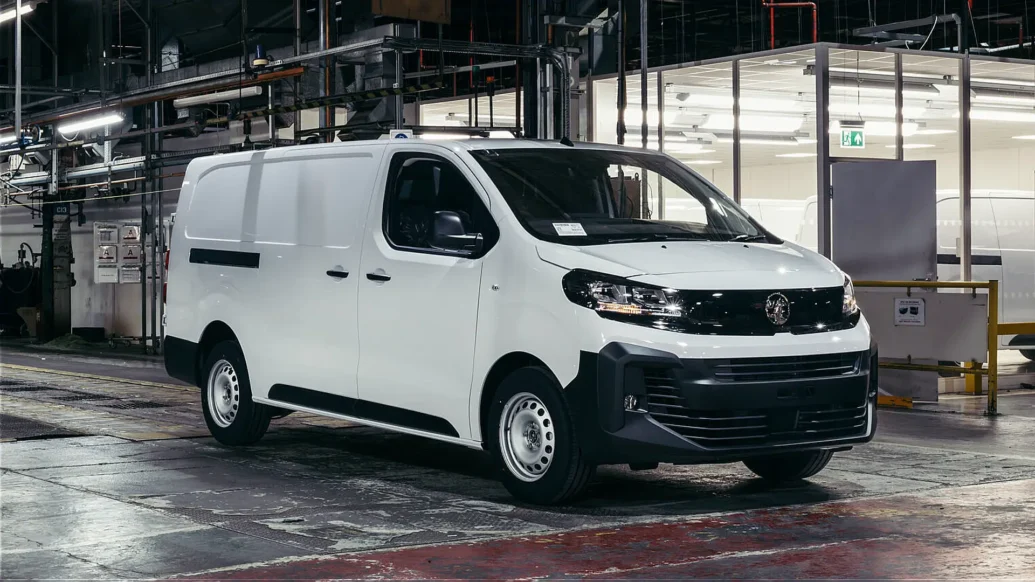
Vehicle production at Vauxhall’s Luton plant has officially ended after 120 years. The final Vauxhall Vivaro van rolled off the production line at 12:18 GMT on Friday, 28 March, bringing to a close the site’s long-standing history as a manufacturing hub.
Luton’s connection to Vauxhall stretches back to 1905 when the company moved from London to a newly built industrial estate in the town. Since then, the site has produced a wide array of vehicles, with the final passenger car, a Vauxhall Vectra, rolling off the line in 2002 under General Motors’ ownership.
Following the end of passenger car production, the Luton plant was repurposed to focus exclusively on commercial vehicles, including the Vivaro van.
The closure comes as part of a strategic shift by parent company Stellantis, which announced plans in November to consolidate its UK commercial vehicle production at Ellesmere Port, with a £50 million investment to transform the site into a dedicated electric LCV manufacturing plant.
However, the decision has put over 1,000 jobs at risk, sparking concerns over the economic impact on the local community. Stellantis stated there will be a transition period to transfer machinery and share process knowledge from Luton to Ellesmere Port.
Luton Borough Council’s Portfolio Holder for Employability and Skills, Cllr Javeria Hussain, said the council had tried to negotiate with Stellantis to mitigate the impact but was met with rejection. “I’m so angry at Stellantis, so, so angry that they didn’t even give us an opportunity, a chance to put an alternative perspective. We put in an offer that they rejected, that would’ve somewhat helped our residents, but they just weren’t interested,” she said. Despite the setback, Hussain pledged continued support for affected workers and their families.
Luton South MP Rachel Hopkins also paid tribute to the workforce, acknowledging their dedication until the very end and describing Vauxhall as a key part of Luton’s heritage. “I stand with the workforce and their families at Luton’s Vauxhall plant as the final vans rolled off the production line this afternoon, following the devastating decision by Stellantis to close the plant,” commented Hopkins.
Unite General Secretary Sharon Graham was more forthright, earlier condemning Stellantis’ decision as a “betrayal” and describing the closure as “a total disgrace.”

The timing of the closure is particularly striking, given that the plant was reportedly profitable and had been scheduled to commence production of the new electric Vivaro this year. Instead, that manufacturing will now be handled exclusively at Ellesmere Port.
Luton Borough Council expressed interest in purchasing the land occupied by the van-making factory. However, negotiations were unsuccessful, leaving the future of the site uncertain.
“Our employees always remain our priority, and we continue to act responsibly towards our colleagues in Luton,” acknowledged a Stellantis spokesperson. “We continue with direct consultation meetings, relocation support for those who wish to transition to Ellesmere Port and onsite support activities, such as job fairs, CV writing, retraining support and wellness sessions.”
Production of the electric Vivaro and its Citroen, Fiat, Peugeot and Toyota-badged versions will move to Ellesmere Port — which recently celebrated its 60th anniversary — in the coming months.

- Electric Van Man plugs market gap with UK’s first dedicated used electric van dealership - 17 September 2026
- Stellantis sets 2029 date for next-generation large van - 17 September 2026
- Ford puts Transit City to work with new chassis cab - 16 September 2026