
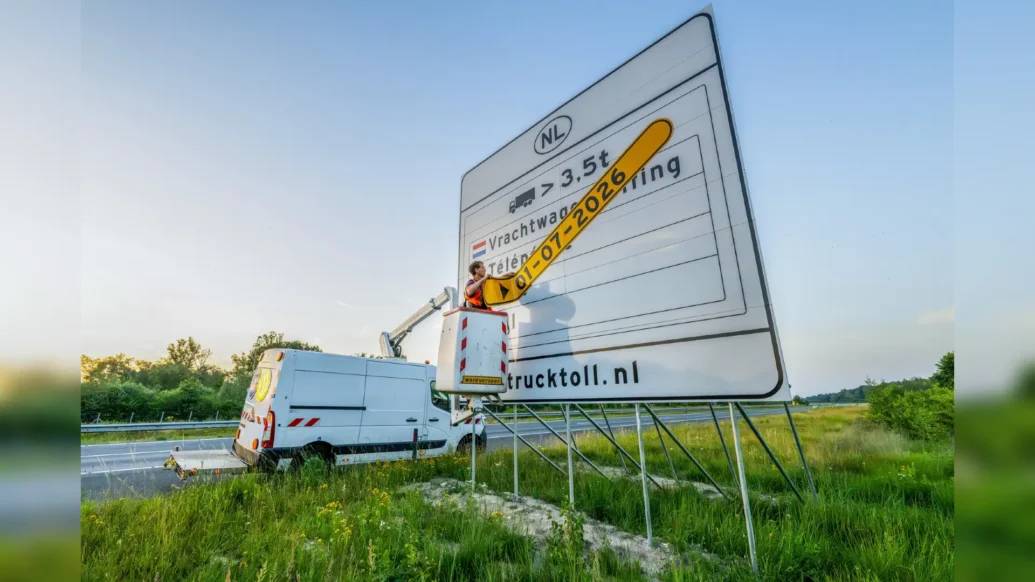
A new truck and van toll has come into force in the Netherlands, affecting Dutch and foreign commercial vehicles with a technical maximum mass of more than 3.5 tonnes.
The charge applies from 1 July 2026 and covers almost all Dutch motorways, along with some provincial and municipal roads.
For UK operators, the key point is that the toll applies to foreign-registered vehicles in categories N2 and N3. That means heavier vans and light trucks above 3.5 tonnes will be affected when travelling in the Netherlands.
However, electric vans and trucks up to 4.25 tonnes are exempt from the toll, although foreign-registered vehicles must still register the exemption in advance . That means UK operators running heavier electric vans into the Netherlands should not assume they can simply ignore the system.
The exemption is particularly relevant as more electric vans are being offered at 4.0 tonnes and 4.25 tonnes to offset battery weight while preserving payload. Operators using those vehicles internationally will need to check the registration process before travelling.
All vehicles covered by the scheme must use a working onboard unit, or OBU, linked to a contract with an approved toll service provider. The toll is then charged per kilometre driven.
The previous Eurovignette system has been abolished in the Netherlands, with the new distance-based charge replacing it for vehicles covered by the scheme.
Toll rates vary according to vehicle weight and emissions, meaning cleaner and lighter vehicles pay less per kilometre.
Dutch motor vehicle tax has also changed as part of the reform. The tax has been abolished for trucks up to 12 tonnes, while rates for heavier trucks have been reduced to the European minimum level.
A large proportion of the revenue from the truck toll is due to be reinvested in the road transport sector, including support for zero-emission trucks, charging infrastructure and more efficient transport.
There is also a temporary reduction in the truck toll rate from 1 September to 31 December 2026. The Dutch government says rates will be cut by 22.3% during that period in response to higher fuel prices linked to the conflict in the Middle East.
Enforcement has started, although fines for non-compliance will be reduced by 50% during the first six months.

- Volvo EX30 Cargo secures £2,500 electric van grant - 14 October 2026
- Fiat Doblo tops first Warrantywise used van reliability index - 8 October 2026
- Van market grows 4.8% in September as electric registrations reach record high - 5 October 2026