
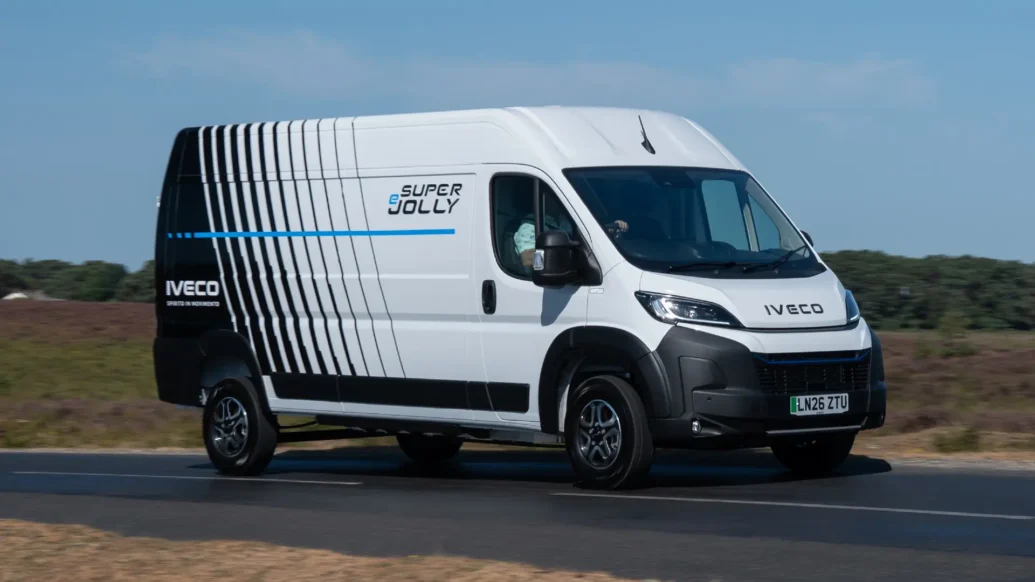
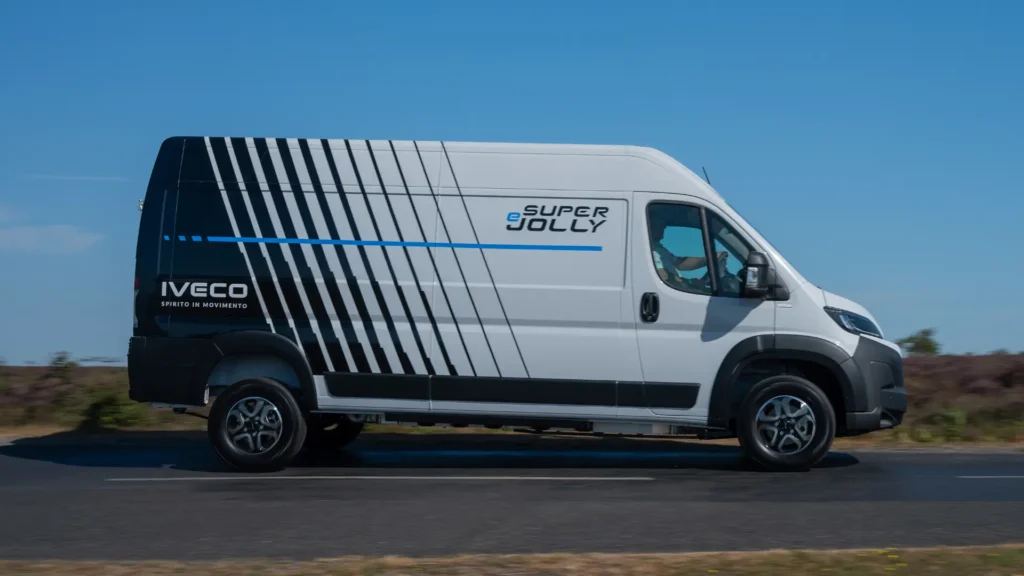
The Iveco eSuperJolly is an entirely new large electric van. Except, of course, it isn’t.
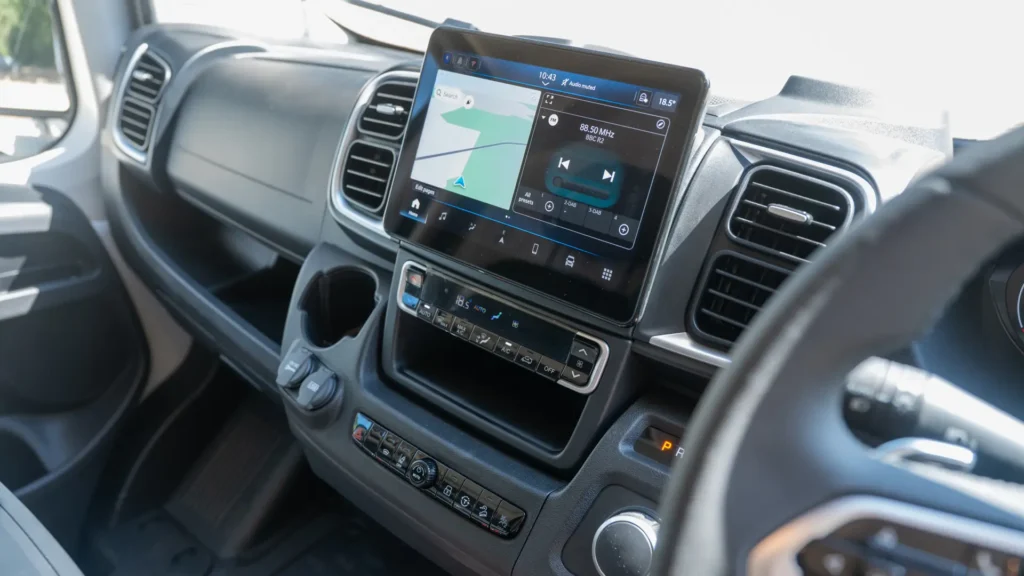
Look beyond the Iveco badges and the eSuperJolly is mechanically the same van as the Citroen e-Relay, Peugeot E-Boxer, Vauxhall Movano Electric, Fiat E-Ducato and Toyota Proace Max Electric.
That means the same body, the same battery, the same electric motor and, fundamentally, the same driving experience. If you’ve driven any of the others, precious few surprises are waiting for you here.
What Iveco hopes will make the difference isn’t the van itself, but everything surrounding it. The eSuperJolly will be sold and supported through Iveco’s HGV-focused network, with the sort of 24/7 backup and uptime-focused support more commonly associated with trucks.
That might make considerable sense to an operator already running an Iveco fleet. Whether it’s enough to persuade an owner-driver to spend more on effectively the same van remains rather less certain.
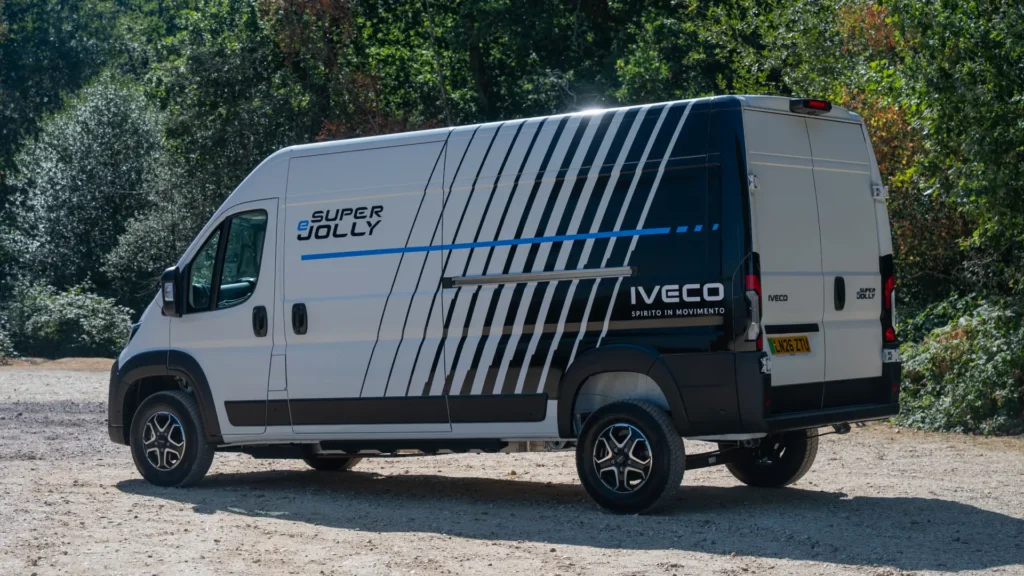
Familiar hardware
We drove the 4.25-tonne eSuperJolly, with the van using a 110kWh battery and 275hp electric motor producing 410Nm of torque.
Iveco quotes a combined WLTP range of up to 261 miles, with charging supported at up to 150kW DC and 22kW AC.
Those numbers will sound familiar because they are.
The same basic electric powertrain sits beneath the latest Stellantis large vans. In previous testing, we’ve found the real-world range generally somewhere around the 200-mile mark depending on load, weather and driving conditions. And, to be fair, in particularly favourable circumstances, we’ve achieved considerably more.
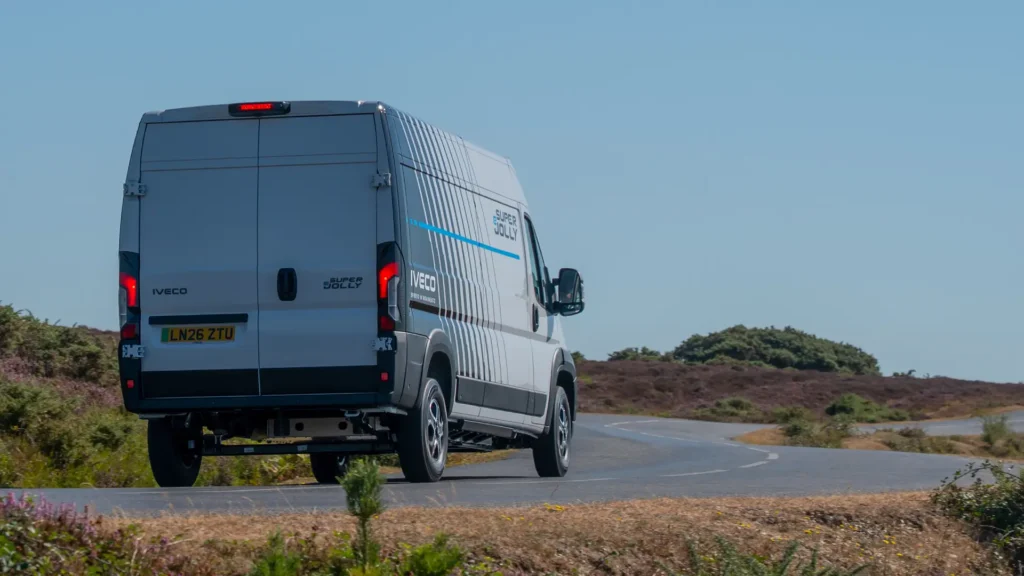
Performance certainly isn’t an issue. The eSuperJolly moves away from a standstill with the sort of enthusiasm that still feels slightly absurd in a van this size, while there’s ample power in reserve for joining faster roads or dealing with hills, even when loaded.
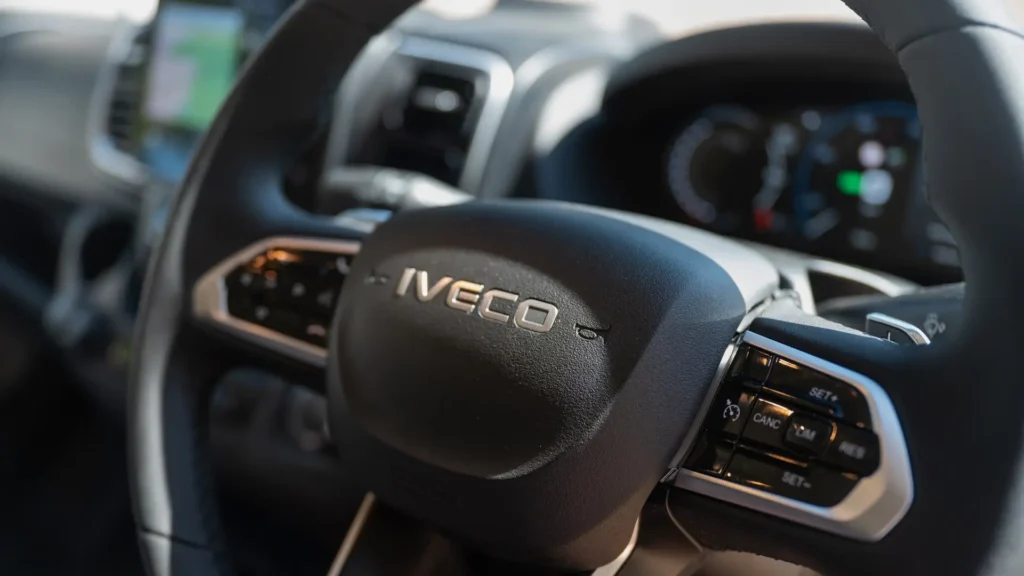
There are selectable driving modes to trade performance for efficiency, while regenerative braking can be adjusted using paddles behind the steering wheel.
All very useful, but none of it new.
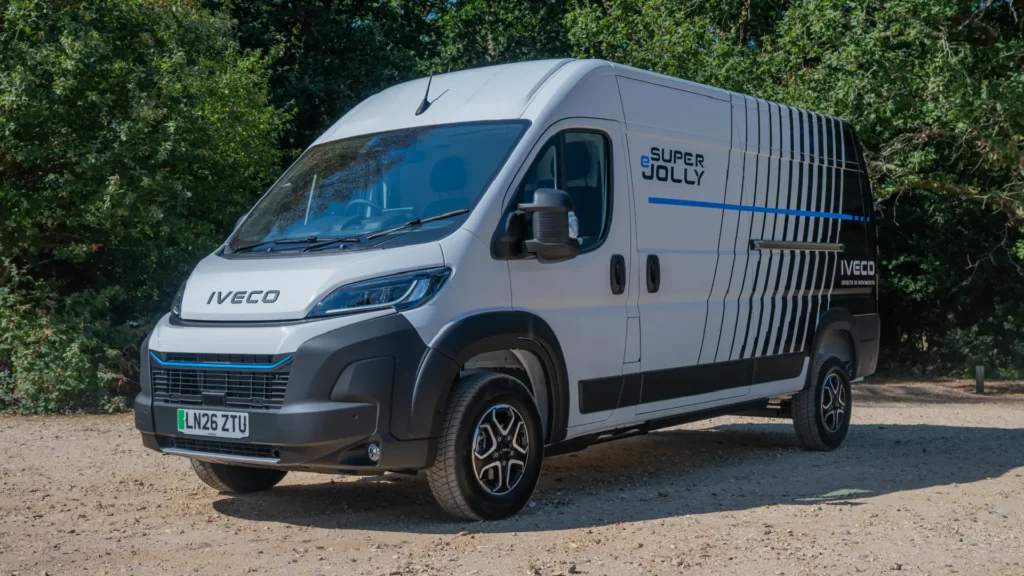
What is the Iveco eSuperJolly like to drive?
Exactly like you’d expect. Power delivery is smooth, strong and easy to modulate, particularly around town, and the electric drivetrain suits stop-start commercial work extremely well. There’s a pause from standstill before it starts rolling, but that feels engineered to prevent accidental smoky burnouts rather than any drivetrain lag.
Unfortunately, the eSuperJolly also inherits the weaknesses of the van beneath it.
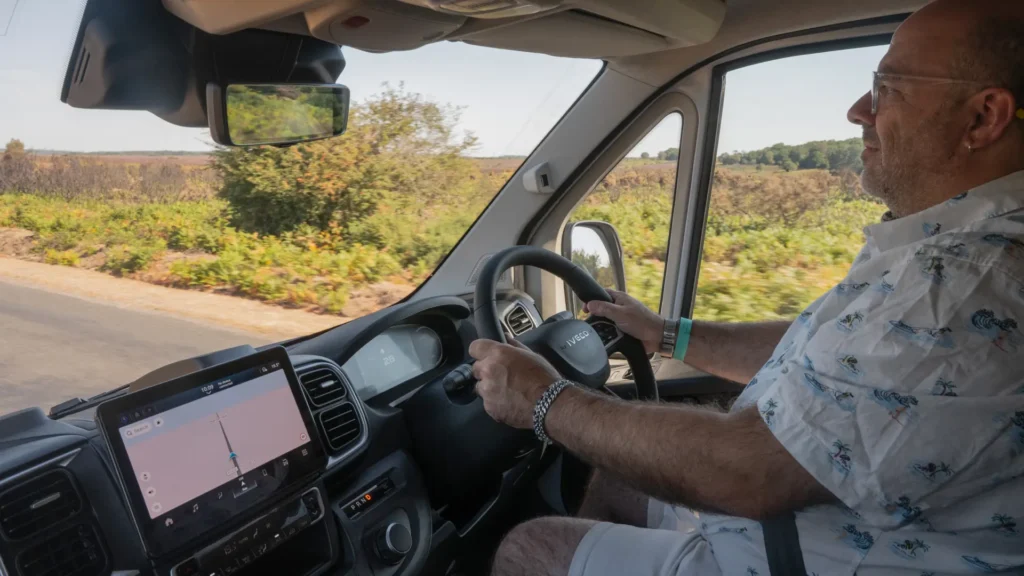
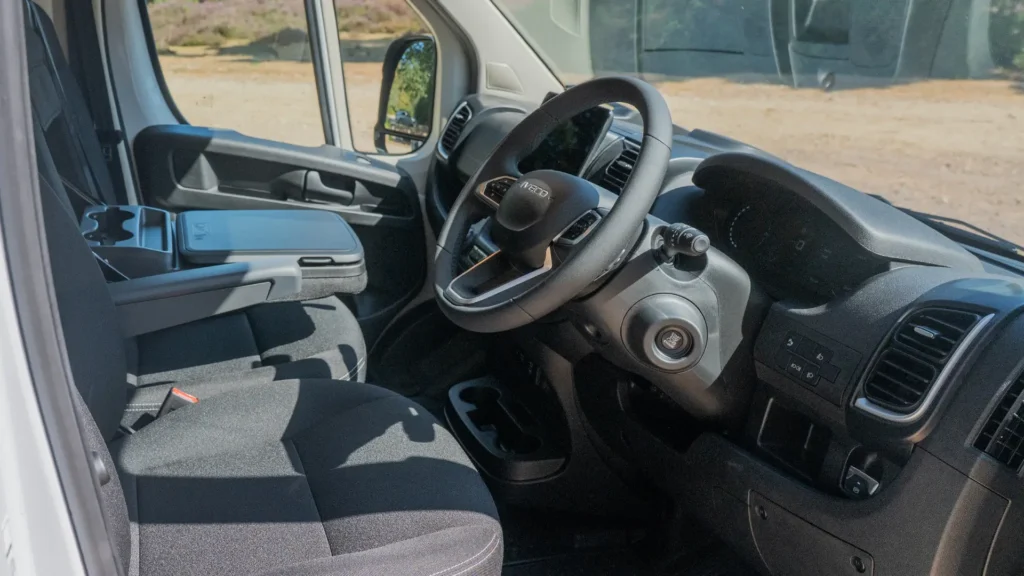
The underlying platform dates back two decades and there’s no disguising that from behind the wheel. Steering is vague, the suspension can feel harsh and unsettled over broken surfaces, and there’s more body movement than you’ll find in newer rivals.
Put some weight in the back and things improve, while motorway cruising is relatively relaxed, but more modern electric vans including the Renault Master E-Tech, Ford E-Transit and Farizon SV simply feel more sophisticated.
There’s nothing particularly wrong with the eSuperJolly dynamically. It just feels old.
That’s particularly noticeable because the electric drivetrain itself is so competent. There’s a strange mismatch between the effortless powertrain and the rather agricultural behaviour of the chassis underneath it.

Plenty of van behind the cab
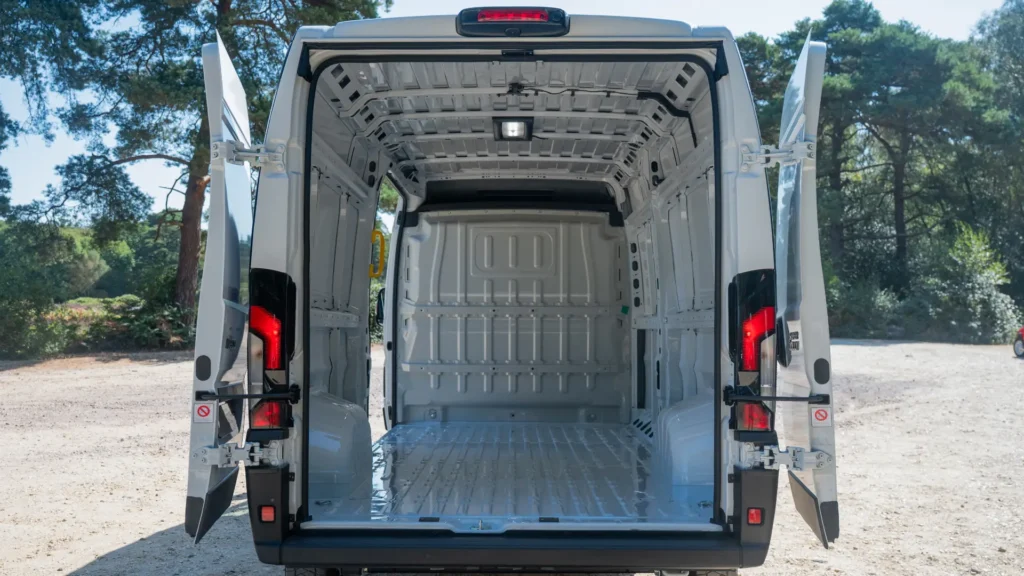
Iveco says the eSuperJolly range will offer up to 17m3 of load volume, around 1.4 tonnes of payload and a 2.4-tonne towing capacity. We don’t doubt that, as it’s exactly what all the others say about their versions of the van, and makes practicality one of the stronger parts of the package.
The range runs from a 3.5-tonne L3H2 with a cargo volume of 13m3, through the taller L3H3 model, and up to the L4H2 with the headline 17m3 offering.
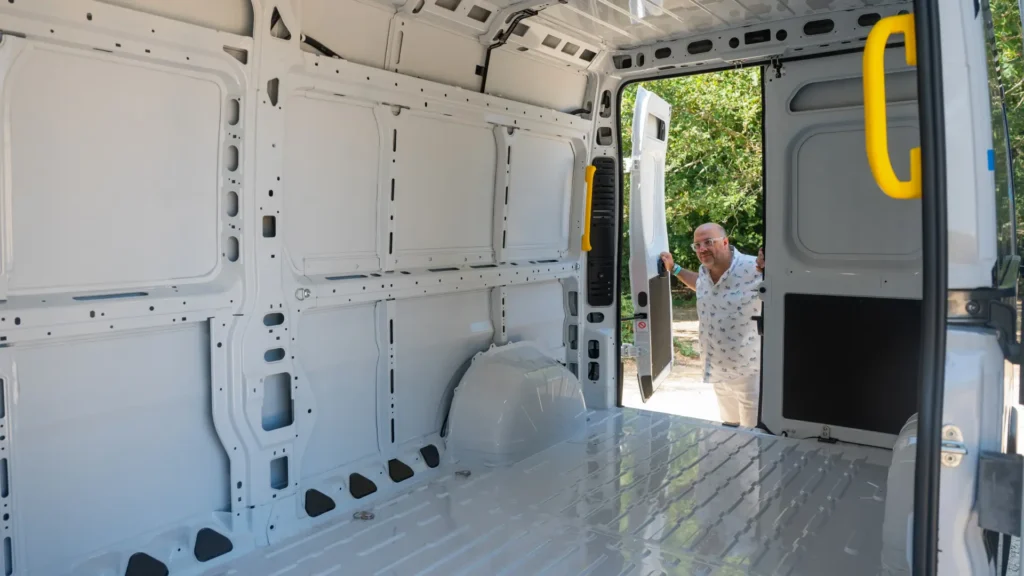
The square-sided load area makes good use of its footprint and, because the battery sits beneath the floor, cargo volume isn’t sacrificed compared with the combustion-engined versions.
The 4.25-tonne model also provides a far more useful payload than the equivalent 3.5-tonne electric van. Opt for the lighter van, and payload can drop to a little over 700kg, but moving to 4.25 tonnes takes that to roughly 1,450kg.
Better still, the regulatory headaches that once came with moving beyond 3.5 tonnes have largely disappeared. Recent changes mean the 4.25-tonne electric van can be operated broadly like a conventional 3.5-tonne diesel van, although the 56mph speed limiter remains. That makes the heavier eSuperJolly a considerably more convincing proposition than it would have been previously.
The real difference is Iveco
So far, there’s very little reason to choose the eSuperJolly over one of its relatives.
That changes when you stop looking at the vehicle and start looking at the ownership package.
Iveco is positioning the eSuperJolly as part of its wider commercial vehicle operation rather than simply another electric van. There are five years of connected services through the eStart Pack, including uptime monitoring and management, Iveco ON access, the Easy app, eRange Assurance and remote-control functions.
More important will be access to Iveco’s truck-style support infrastructure.
For a fleet, no matter how large or small, where a vehicle being off the road can cost hundreds of pounds a day, round-the-clock backup has a tangible value. An operator already running Iveco Daily vans or heavier Iveco trucks may also appreciate being able to bring another vehicle into the same support structure.
And that, ultimately, is the entire point of the eSuperJolly.
Toyota already demonstrates that there can be a reason to choose one version of this shared van over another. Its Proace Max Electric combines the same mechanical package with warranty cover potentially extending to ten years, making the ownership proposition rather more compelling for some buyers.
Iveco is trying to do something similar, but with uptime and commercial support rather than warranty length.
How much will the Iveco eSuperJolly cost?
That could be where things become difficult. UK pricing hasn’t yet been confirmed, but the eSuperJolly is expected to carry a premium over the mechanically identical Stellantis models.
Without knowing exactly how large that premium will be, it’s impossible to make a final judgement.
For a small business or owner-operator looking primarily at purchase price, monthly payments and running costs, it could be difficult to justify spending extra when a Citroen, Peugeot or Vauxhall provides fundamentally the same driving experience, range and load space.
But larger fleets may see things differently.
If the additional cost buys faster support, reduced downtime and the reassurance of Iveco’s commercial network, particularly for a company already operating Iveco trucks, the calculation becomes rather more interesting.
Iveco eSuperJolly First Drive verdict
As a van, the Iveco eSuperJolly holds almost no surprises.
It has a powerful electric drivetrain, strong rapid-charging capability, competitive range, and a vast cargo area. It also has vague steering, an unsettled ride and a platform that feels considerably older than the best electric vans now available.
In other words, it’s exactly what we expected because we’ve effectively driven it several times before.
What makes the eSuperJolly interesting is Iveco’s support proposition. Fleets already embedded in the Iveco ecosystem could find considerable appeal in adding an electric large van backed by the same sort of uptime-focused service they expect from their trucks.
For owner-drivers and smaller businesses, the argument looks tougher, particularly if the anticipated price premium is significant.
There’s another awkward question for Iveco, too. With the eSuperJolly covering the 3.5- and 4.25-tonne end of the market with conventional van packaging, it starts to make the lighter versions of Iveco’s own eDaily considerably harder to justify.
The eDaily remains a fundamentally different, heavy-duty vehicle, but customers who don’t need that capability may now find the cheaper, lighter and easier-going eSuperJolly the more obvious choice.
Perhaps the biggest threat to the eSuperJolly, then, isn’t one of its five near-identical siblings.
It might be sitting on the other side of the Iveco showroom.

- KGM gains new Stamford outlet as TC Harrison joins network - 27 August 2026
- Iveco eSuperJolly First Drive: Familiar van, different proposition - 13 August 2026
- Mercedes Vito Sport-X brings sporty makeover to Crew van range - 12 August 2026